Bible FAQ — Scripture, faith & Church
Clear answers for Catholic and Christian readers — rooted in Holy Scripture and easy to discover in search.
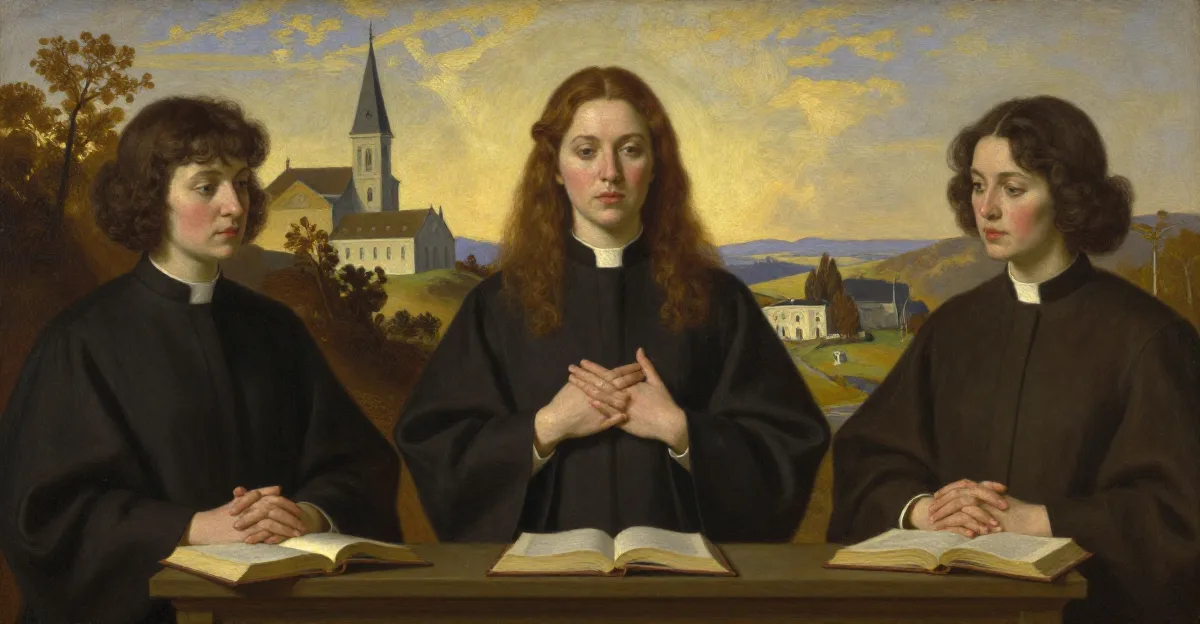
Women Pastors: What the Bible Says & SBC Debate
The Southern Baptist Convention's 2023-2026 votes to ban women pastors have sparked intense debate among evangelicals. This guide examines 1 Timothy 2:12, Galatians 3:28, and key biblical texts through complementarian and egalitarian lenses, offering a balanced theological analysis with original language insights, the full SBC timeline, and practical guidance for churches and women navigating this controversy.
Hearing God's Voice: How to Discern It
Discover how to recognize God's voice through biblical testing, spiritual direction, and psychological grounding. Learn a proven Catholic discernment framework to distinguish divine guidance from anxiety, emotional impulses, or spiritual confusion.
Why Does God Allow Suffering? A Bible Q&A Deep Dive
This Bible Q&A deep dive explores the theological, historical, and pastoral dimensions of human suffering. Drawing from original languages, patristic wisdom, and Catholic tradition, it offers tiered insights for beginners, intermediate students, and scholars. Discover how Scripture reframes pain as a pathway to grace and practical daily application.

“Non-Canonical Gospels” Are Not in the Bible — Why?
Texts like the Gospel of Thomas or many later documents are often mentioned online; one must distinguish between archaeology, genre, and the canon that the Church authenticates for faith.

Prophecy and the Life of the Church Today — How to Discern?
Scripture is full of prophecy; the Church today still believes the Holy Spirit is active, but we must discern from arbitrary self-proclaimed prophets — holding fast to teachings on truth and humility.

What to Do When You Don't Understand a Bible Passage?
No need to be ashamed: difficult passages are normal. Slow down, research the context and genre, use reputable commentaries, and consult your pastor — avoid jumping to conclusions online.

How to Choose a Bible Translation When You Are Just Starting?
There is no "one true version" for every purpose: it is necessary to distinguish between the faithful version of the original text, the easy-to-read version, and the version with academic notes — always within the category of the Church.

Is There an Inevitable Conflict Between the Bible and Science?
Catholic faith is not based on false 'scientific proofs of Scripture,' nor does it consider natural science an enemy: both respect truth within the bounds of their own methods.

Who Has the Right to Correctly Interpret Scripture in the Church?
Everyone is invited to read Scripture; but the official right to interpret belongs to the Magisterium of Christ — not out of pride but to protect the Word of God from private interpretation.

Scripture in Prayer and Liturgy
God's Word is not just for 'rote learning': Sacred Liturgy places Scripture at the center; personal life can be nourished by slow reading, meditation, and community communion.

Is There a Conflict Between Sacred Tradition and the Bible?
Catholicism does not place "Scripture alone" in opposition to "tradition alone": both originate from the same source of revelation and serve the same faith.

Why Does the Catholic Bible Have Additional Old Testament Books?
The books often called 'apocrypha' or 'Apocrypha' in Protestant editions are the ones Catholics (and Orthodox) still read in the historical context of Israel and the early Church — they are not 'secretly added later'.

Literal Meaning and Spiritual Meaning When Reading the Bible — Catholic Framework
Catholicism does not choose between "literal meaning" and "figurative meaning": the meaning according to the text is foundational; the theological meanings unfold within the Church in the light of the entire Gospel.

Why Are There So Many Bible Translations? Which One Should You Read?
Translating from Hebrew, Aramaic, and Greek into Vietnamese or English always involves word choices. Understanding word-for-word (formal) and thought-for-thought (dynamic) translations helps you choose the right version—and know when to consult a commentary.

Faith and Works in Scripture — A Contradiction Between Paul and James?
Romans emphasizes "by faith"; James says "faith without works is dead." Catholicism holds both together in a living faith that receives salvation — not earned, not fruitless.