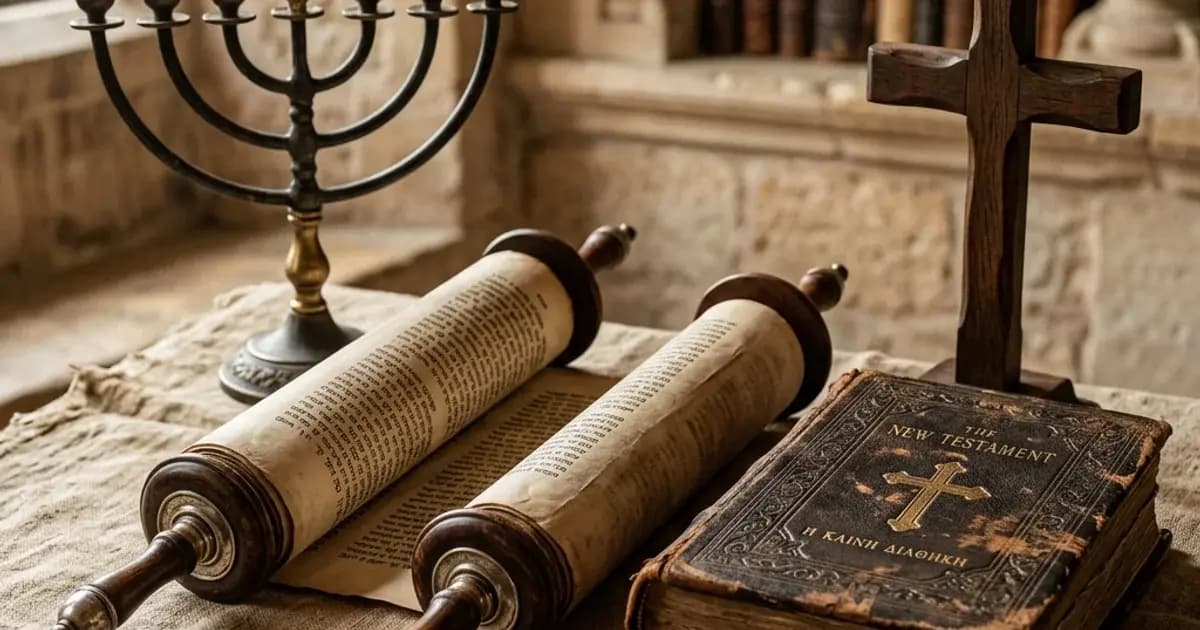
A common misunderstanding: “The Old Testament is a God of wrath, the New Testament is a God of love.” The reality is more complex and beautiful. The entire Bible tells one story of salvation: God calls Abraham, makes a covenant with Israel, and in the “fulness of time” sends his Son to redeem and renew. Jesus does not abolish the Old Testament but fulfills it (see the Gospel passages on the Law and the Prophets).
Christ is the “key” to reading the Old Testament
Catholics read the Old Testament in the light of Christ and the Church. Many images (Lamb, Passover, Temple…) are illuminated by the Gospels and Apostolic letters. This does not mean forcing a hidden meaning onto every verse, but recognizing the process of revelation that has a goal.

Why do we still need the Old Testament today?
Because we do not understand the “new” without knowing the “old” in the sense of covenant; because the Psalms nourish the Liturgy; because the prophets of justice and mercy still challenge society. The Church does not advise abandoning the Old Testament — only reading it with proper context and teaching.
Interfaith respect for the Scriptures of Israel
Christians read the Old Testament as a shared heritage with Judaism — not to appropriate or mock. The Church has repeatedly emphasized the special relationship with the covenant people; when studying the Bible, avoid a tone of replacement or boastfulness. This FAQ does not replace in-depth interfaith books; it simply sets the right attitude when we open Genesis or the Psalms.
Reading the Old Testament in the weekly Liturgy
Almost every Sunday has a first reading from the Old Testament (or Acts/a related epistle). If you are only familiar with the Gospel, spend five minutes reading the first reading beforehand — you will see the prophecy–fulfillment rhythm without forcing a hidden interpretation on every verse. This is the most practical way for laypeople to “enter” the Old Testament.
The New Testament “interprets backwards” the Old Testament
When reading Paul’s letters or Hebrews quoting Genesis, Exodus, or the Psalms, go back to the original passage — you will see the same God continuing the story, not changing sides. That habit trains the Christian eye to see the Bible as one journey, not as two opposing books.
“They spoke about me” — Jesus explains the Scriptures to the disciples on the road to Emmaus.
— Luke 24:27 (summary paraphrase)