The question "The Bible says the heavens were created in seven days, science says otherwise — so is faith wrong?" often begins from a category mistake: putting religious poetry, ancient narratives, or liturgical symbols into the same framework as modern laboratory reports. The Catechism teaches that God created and that man can discover the world with his intellect (see CCC §283-284, §159 on faith and reason both tending toward truth). That does not mean every scientific hypothesis is permanently correct — science corrects itself — but neither does it mean we reject fossils or cosmology simply because of a rigid reading of the text.
Two "books" of God: creation and revelation
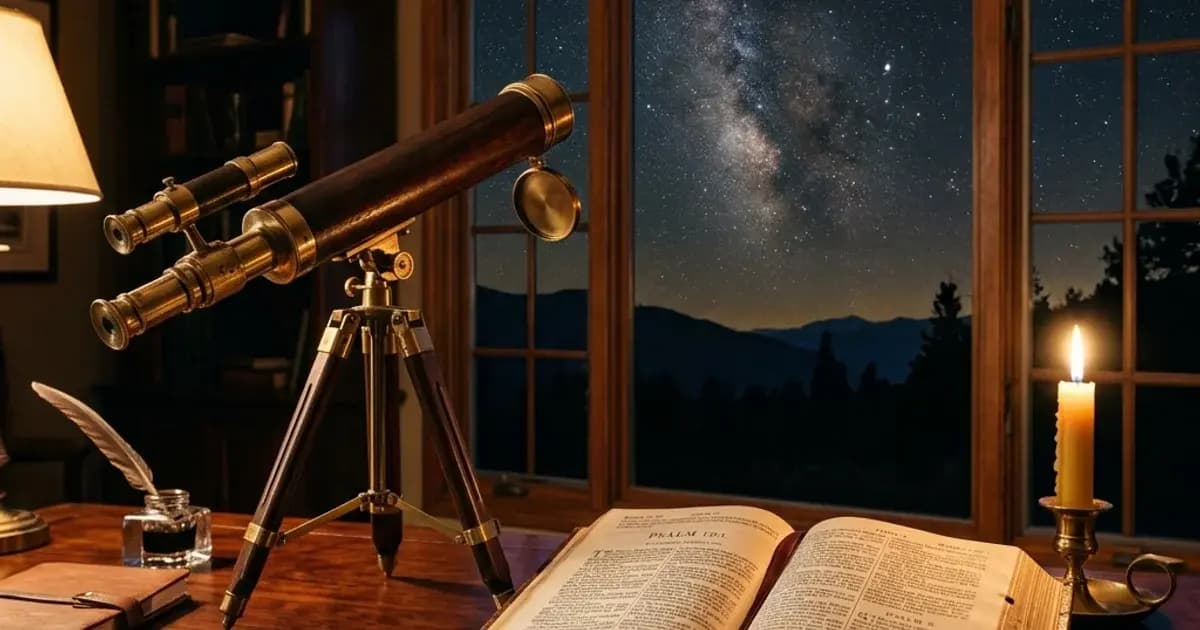
Catholic tradition speaks of the book of creation (the world) and the book of revelation (Scripture): the same Author does not contradict; conflict usually comes from misunderstanding one of them. When reading creation, we must ask what the human author intended to affirm about God and man (unique, good, ordered, holy rest…), not force the text into a geology manual.

Avoid false proofs and false doubts
Do not use Scripture as a physics textbook; nor use science as a theological silence to replace God. This article does not settle specialized debates; it guides faith: you can be a Christian and respect honest research, in humility before both mystery and data. Read more about literal and spiritual sense to avoid rigid reading.
Official sources instead of rumors
This article does not replace pastoral teaching or the full Catechism. For verification, consult the Compendium of the Catechism and Vatican II documents — especially Dei Verbum regarding questions on Scripture. Websites claiming to be “Catholic catechism” without verifiable sources are not sufficient grounds for faith or morals.
We do not fabricate false quotes or unverified “the saint said” statements; references here point to publicly published documents. If there is any discrepancy with the current Catechism, the Catechism text takes precedence.
In summary
- Faith and reason both tend toward truth (CCC §159).
- Creation and revelation have the same Author; conflict often arises from misunderstanding genre.
- Avoid false scientific proofs from Scripture and theology from scientific conjecture.