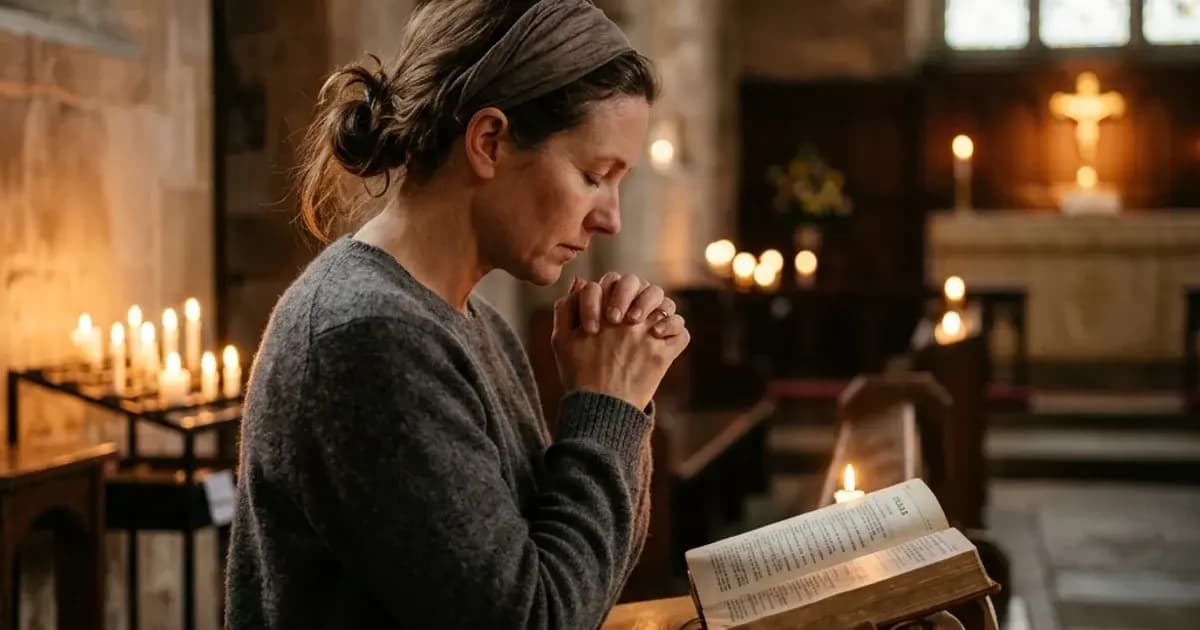
Many people separate Scripture reading from Mass and from daily prayer, as if the book is only for the classroom. In fact, Dei Verbum and the Catechism emphasize that God's Word “nourishes” the Christian life and is proclaimed especially in the Liturgy — where the Church hears and responds. The Sunday readings and the Liturgy of the Hours are the common framework that helps the entire People of God eat the same “meal” of God's Word, not just those who choose their favorite passages.
Lectio: Slow Reading in the Spirit
The Church encourages slow reading — meditation — prayer — contemplation (lectio-meditatio-oratio-contemplatio) as a personal entry into God's Word, but not separated from teaching and Liturgy. If one is only “moved” without comparing the literal meaning and doctrine, it easily goes astray; if one only “memorizes” without praying, it easily becomes dry.

Begin with Simple Practice
A small step: read the First Reading, Second Reading, and Gospel before Sunday; write down a sentence to carry through the week. Refer to where to start if you are new. If you want to understand more about faith and action, see faith and good works.
Pope Francis invites the community to celebrate the Sunday of the Word of God according to the local liturgical calendar as an occasion to renew commitment to Scripture in the Liturgy and in the family; the related encyclicals and guidelines are published on the Vatican website to show clearly that the Church connects the readings with life and does not confine God's Word to a book alone.
Official Sources Instead of Rumors
This article does not replace pastoral teaching or the full Catechism. For verification, refer to the Compendium of the Catechism and Vatican II documents — especially Dei Verbum for questions about Scripture. Websites that claim “Catholic teaching” without verifiable sources are not sufficient as a basis for faith or morals.
We do not fabricate fake quotes or unverified “Saint said” statements; all references here point to publicly published documents. If there is any discrepancy with the current Catechism, the Catechism text takes precedence.
In Summary
- The Liturgy is where the Church proclaims and lives God's Word.
- Personal reading should combine lectio with teaching.
- The Sunday readings are an easy starting framework.