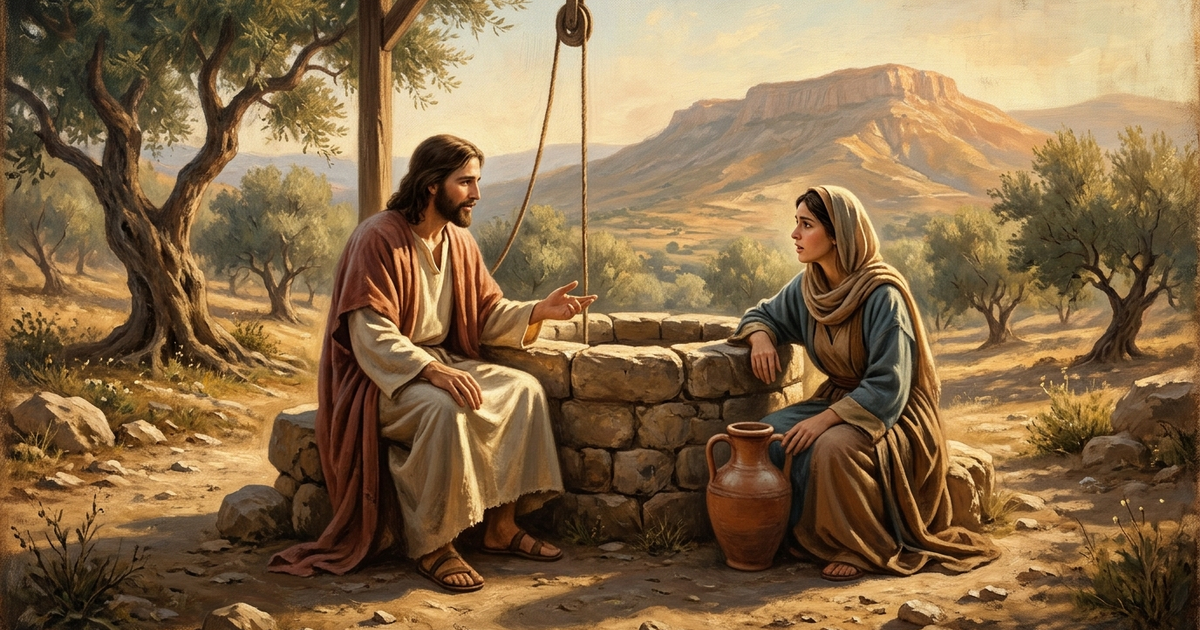
In the fourth chapter of the Gospel according to Saint John (4:1–42), Jesus Christ breaks centuries of religious, ethnic, and social barriers by resting at Jacob's Well near the Samaritan town of Sychar at the scorching sixth hour of noon. Exhausted from His journey, the Son of God asks a marginalized Samaritan woman for a drink of water. In Catholic theology, this intimate encounter is one of the crowning jewels of Sacred Scripture. It reveals the divine thirst of the Redeemer for human souls, unveils the gift of the Holy Spirit as a spring of living water welling up to eternal life, inaugurates authentic worship in Spirit and truth, and proclaims the universal scope of salvation extending to all nations.
Christ's Divine Thirst and the Gift of Living Water
Saint Augustine and the Catechism of the Catholic Church (CCC 2560) marvel at the paradox of the Creator of the universe asking a creature for water. When Jesus says, 'Give me a drink,' He expresses not merely physical dehydration, but God's ardent thirst for our faith and love. As the Catechism teaches, whether we realize it or not, prayer is the encounter of God's thirst with ours: God thirsts that we may thirst for Him.
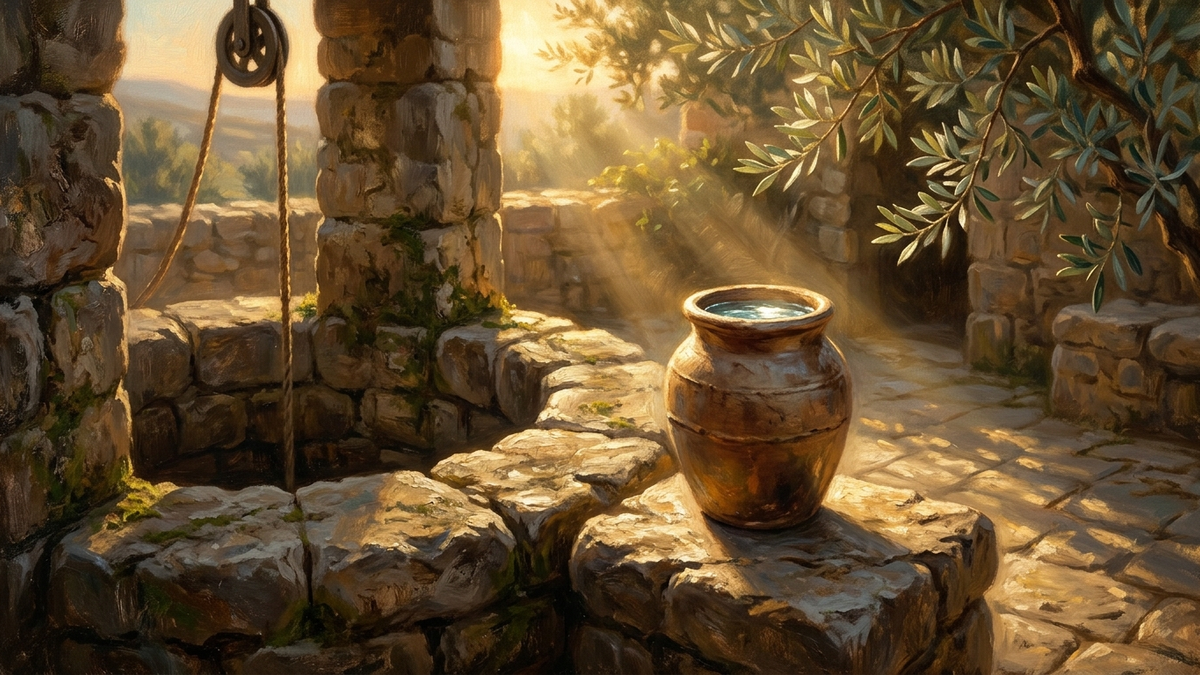
In Old Testament prophecy, God lamented through Jeremiah that His people had forsaken Him, the fountain of living water, to dig broken cisterns that hold no water. At Jacob's Well, Jesus reveals Himself as the true, inexhaustible source of sanctifying grace. While earthly wells satisfy bodily needs only temporarily, the 'living water' Christ bestows is the indwelling Holy Spirit (CCC 728), who purifies the heart and quenches humanity's deepest existential longing.
"Jesus answered and said to her, 'If you knew the gift of God and who is saying to you, "Give me a drink," you would have asked him and he would have given you living water... Everyone who drinks this water will be thirsty again; but whoever drinks the water I shall give will never thirst; the water I shall give will become in him a spring of water welling up to eternal life.'"
— John 4:10, 13–14 (New American Bible, Revised Edition)
Healing the Wounded Heart through Truth and Mercy
Before the Samaritan woman can receive this supernatural gift, Christ gently leads her to confront the brokenness of her past. Coming to the well alone at midday to avoid the scorn of her neighbors, she carries the weight of five failed marriages and an irregular current union. Rather than condemning her with harsh legalism, Jesus illuminates her conscience with compassionate truth, functioning as the Divine Physician who exposes the wound only to heal it.
In Catholic sacramental spirituality, this dialogue mirrors the dynamic of the Sacrament of Penance and Reconciliation. True spiritual liberation never ignores moral reality; instead, the light of Christ's mercy allows the sinner to acknowledge their poverty without fear. Recognizing Jesus as a prophet, the woman moves from defensive evasion to a sincere search for how to worship God rightly.
Worship in Spirit and Truth: The New Temple
Addressing the ancient dispute between Samaritans who worshiped on Mount Gerizim and Jews who worshiped in Jerusalem, Jesus announces a radical liturgical fulfillment. The hour has arrived when true adoration is no longer bound to geographical mountains, but is centered on the person of the Incarnate Word and animated by the Holy Spirit.
"But the hour is coming, and is now here, when true worshipers will worship the Father in Spirit and truth; and indeed the Father seeks such people to worship him. God is Spirit, and those who worship him must worship in Spirit and truth."
— John 4:23–24 (New American Bible, Revised Edition)
When Jesus openly declares to her, 'I am he, the one who is speaking with you' (John 4:26), she leaves her water jar behind—a powerful symbol of abandoning her old life of sin—and runs to the town as an apostle of the Gospel. Through her testimony, many Samaritans come to believe that Jesus is truly the Savior of the world.
Key Takeaways
- The Mystery of Divine Thirst: By asking for water, Christ reveals God's passionate desire for communion with every human soul (CCC 2560).
- Grace of the Holy Spirit: The 'living water' promised by Jesus is the gift of the Holy Spirit and baptismal grace leading to eternal life.
- Mercy and Conversion: Jesus meets sinners in their isolation, uniting uncompromising moral truth with restorative divine compassion.
- Liturgical Fulfillment: Worship 'in Spirit and truth' transcends Old Covenant sanctuaries and finds its center in Christ and the Church's sacramental life.
- Missionary Witness: Once healed by Christ's word, the Samaritan woman leaves her jar behind and becomes a joyful evangelizer to her community.
Drawing from Jacob's Well in Daily Prayer
The encounter at Sychar speaks directly to modern hearts exhausted by the restless search for fulfillment in fleeting worldly pleasures. Like the Samaritan woman, we often carry heavy jars to broken cisterns that leave our souls parched. The Church invites us to come daily to the well of Sacred Scripture, contemplative prayer, and the Sacraments. When we open our wounded hearts honestly to Jesus, He fills our emptiness with the living water of His peace and transforms us into witnesses of His redeeming love.