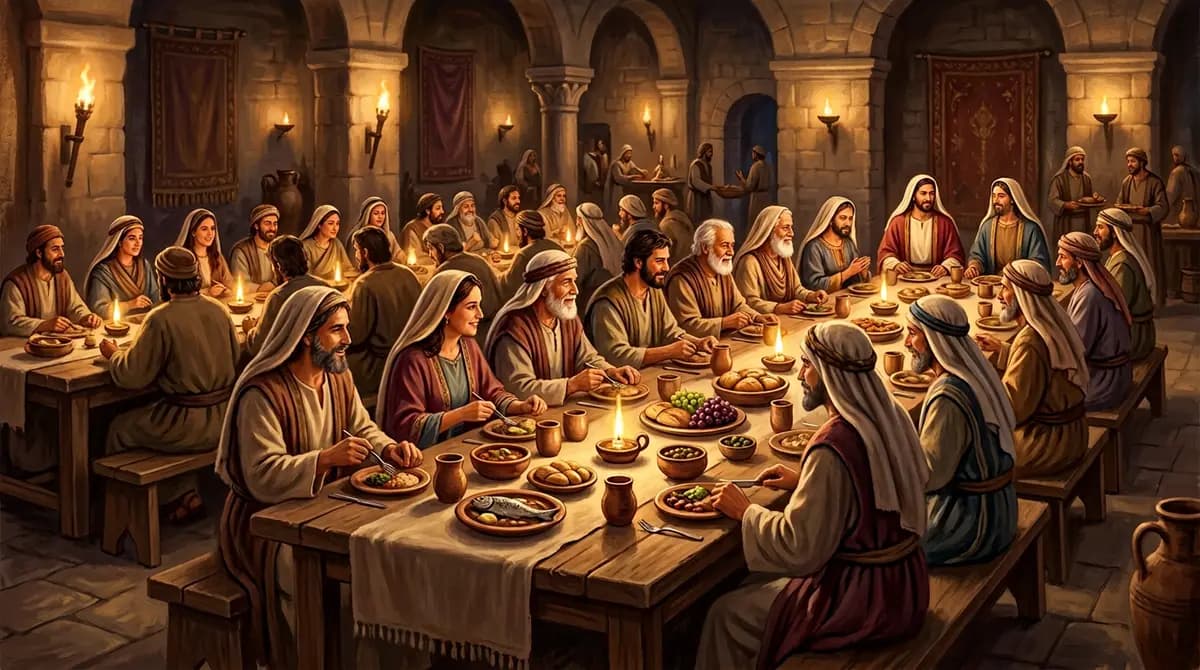
In Matthew 22, Jesus tells the parable of the king's wedding feast to the religious leaders and Pharisees. The king invites guests to his son's wedding, but they refuse; some are busy with fields, some with business, others seize the servants and kill them. The king sends troops to punish the murderers and burn their city, then invites everyone on the streets — both good and bad — and the banquet hall is filled. One man without a wedding garment is cast out; Jesus concludes: "Many are called but few are chosen" (v. 14).

Context in the Gospel of Matthew
The parable follows stories about Jesus' authority and the unbelief of some leaders. Catholic commentaries (e.g., notes in the New American Bible / scholarly editions referenced by the Church) emphasize: the image of a wedding feast evokes covenant and the joy of salvation; the rejection of the invitation symbolizes Israel's failure to welcome the messengers. The wedding garment in the story is debated: many commentators understand it as a convention in ancient culture (guests were provided with festive robes) — lacking it suggests unreadiness or not living worthily of the call, not a matter of "salvation by clothing" literally.
Come to the wedding feast! … Many are called but few are chosen.
— Matthew 22:4, 14 (sense from various translations)Main Points According to the Text
The striking points are the merciful invitation that persists despite contempt, and the severity towards betrayal that has real consequences in the story. The closing verse reminds: being called (into the banquet hall) does not automatically mean being chosen in the full sense — responding to the call in one's life remains important. The reader is invited to ask: am I "busy with the fields" or accepting the Lord's invitation?
Bible Reading Note
Compare with Luke 14:15–24 (the great banquet): same theme but different details — read them in parallel within their respective Gospel contexts, avoiding merging the two into a single "event."
Application in the Community
The Church proclaims the invitation to salvation to all; the sacraments and a life of communion are the way to "put on the garment" worthy of the King's feast. Ask yourself: am I "busy with the fields" making God's word fade? The article stays close to the text and reliable commentaries.
Summary
- Invitation to the wedding feast — image of the Kingdom of Heaven.
- Refusal and violence against messengers punished in the story.
- Invitation of ordinary people — hall filled.
- Wedding garment and the saying "few are chosen" call for a faithful response.