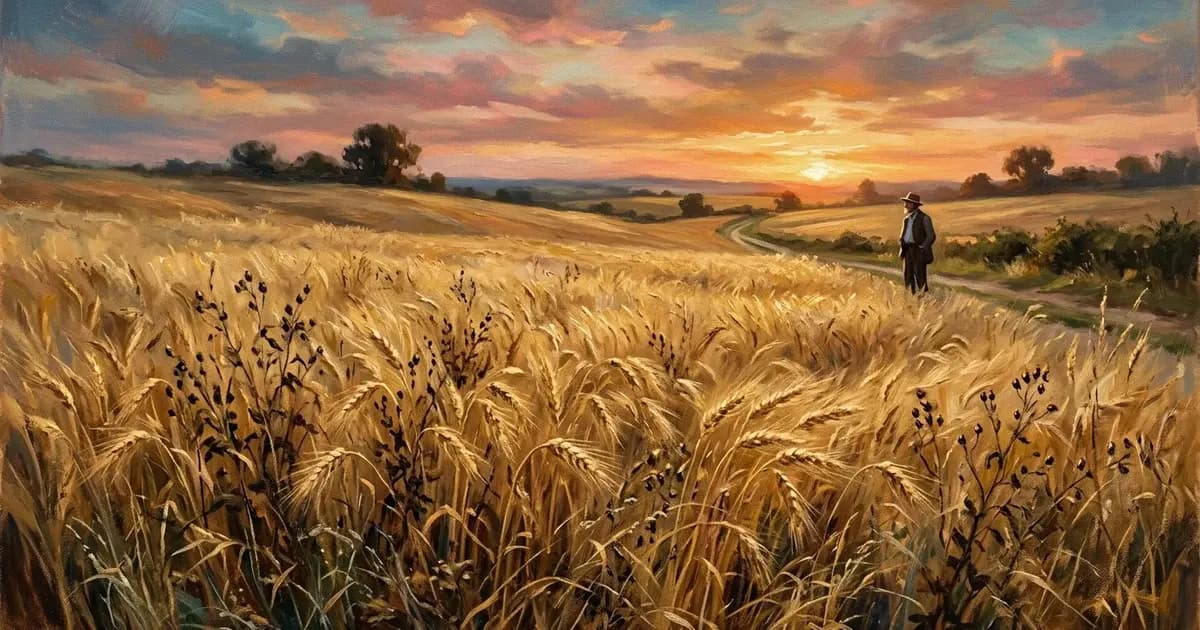
The sower sows good seed; the enemy comes at night and sows weeds (there are weeds that look like wheat when young). The servants want to pull them up, but the master says: let both grow together, lest you pull up the wheat along with them. At harvest time, the reapers gather the weeds and burn them, and the wheat is stored in the barn. Jesus explains: the sower is the Son of Man; the field is the world; the weeds are the children of the evil one; the harvest is the end of the age (Matthew 13:37–43).

Meaning
The parable advises caution when 'pulling weeds' in the Church and society: it is easy to harm the righteous. At the same time, it affirms: the final judgment belongs to God at the right time — justice will come, not indifference to evil.
Let both grow together until the harvest.
— Matthew 13:30 (paraphrase)Application
Live righteously and patiently; avoid appointing yourself as the weed-puller for the whole world; trust in God's justice.
The evil one sows — humans do not control everything
In Jesus' explanation, the enemy is a supernatural agent, not merely 'inferior grain'. This comforts the community when they see evil mixed in the Church: not every problem is due to pure 'poor management', though human responsibility remains. This article does not expand into a doctrine of demons; it stays within the flow of Matthew 13 to avoid overlapping with other theological topics.
Pastoral patience with those who are 'mixed'
Pastors and laypeople sometimes want to 'clean up' immediately any conflicts or people they consider 'weeds'. The parable reminds gentleness and waiting for God's time, while the FAQ below emphasizes: there is still room for discipline and protection of victims. This is the balance this article wants to make clear — no single extreme can fully explain Matthew 13.
The wheat and weeds alongside other parables in chapter 13
Chapter 13 also includes the mustard seed, yeast, pearl, and dragnet — each parable offers a perspective on the Kingdom of Heaven. When studying the parable of the wheat and weeds in isolation, do not separate it from the entire 'parable garden': we will see that God is both patient and searching, both inviting and ultimately just. That is how we avoid turning one metaphor into a rigid slogan.
Summary
- Weeds are from the enemy — not the fault of the sower of good seed.
- Do not pull them up hastily — risk of harming the wheat.
- The harvest — final judgment.
- Patience and hope for justice.