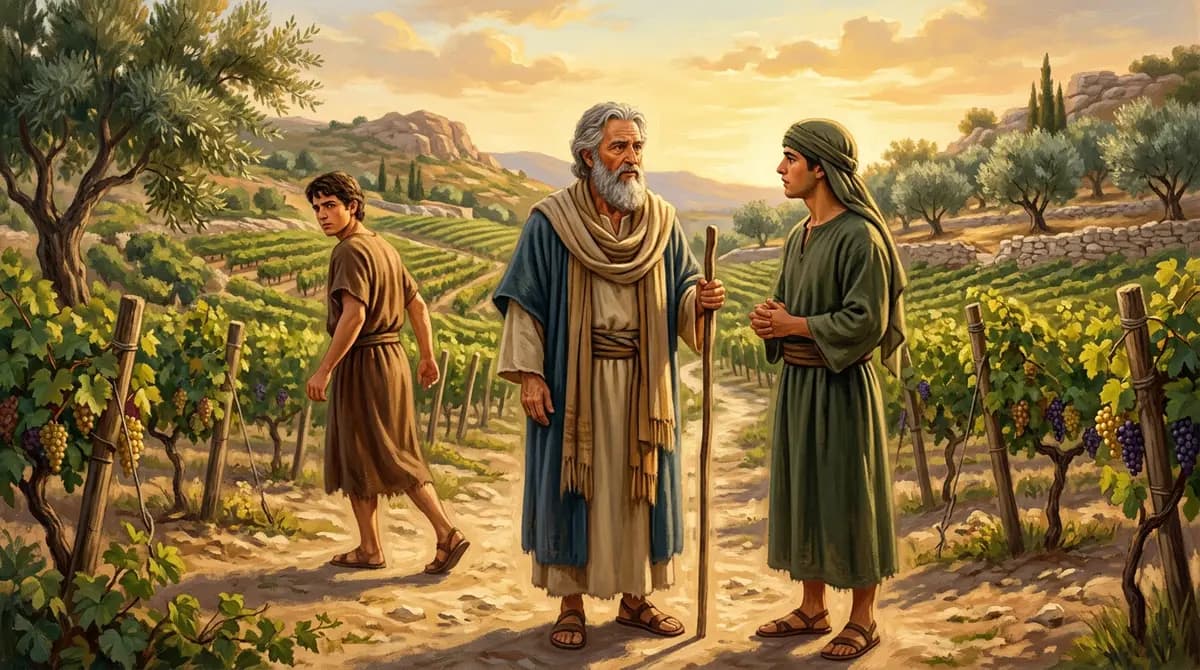
Jesus asked the religious leaders: a father told two sons to go work in the vineyard. The first son answered “I will not go”, but later repented and went. The second son answered “Yes, sir”, but did not go. Jesus asked: “Which of the two did the will of his father?” They answered: the first. Jesus said: “Tax collectors and prostitutes are entering the Kingdom of God ahead of you” because John came to the way of righteousness, and they did not believe him, while they did believe (Matthew 21:31–32).

The Context of Authority in Jerusalem
The parable is part of a series of stories after Jesus entered the city: authority is challenged, the parable of the two sons, and then the vineyard workers. Catholic commentaries emphasize: the focus is on responding authentically to God's invitation (through John the Baptist), not just empty promises.
Tax collectors and prostitutes are entering the Kingdom of God ahead of you.
— Matthew 21:31 (according to various translations)Staying True to the Text, Avoiding Social Stigmatization
The phrase “tax collectors and prostitutes” is words in the story aimed at those who consider themselves righteous but do not believe; it does not justify disparaging specific professions today. The point is: those marginalized by society have believed and transformed their lives, while those with religious status refuse — reversing the expectations of the listeners at that time.
Textual Insight
Some ancient manuscripts (according to notes) reverse the order of the two sons — the main meaning remains: action is more important than empty promises.
Application
Christians are invited: true repentance is more important than mere verbal commitments; serving in the parish and charity towards the poor must involve action, not just slogans. The parable also challenges those who claim to have been “faithful for a long time”: they may have said “yes” to the Father but have not truly gone to do His will in specific actions today. In the context of Matthew, “working in the vineyard” evokes working in the Lord's vineyard — the imagery of Israel and the Church appeared in the previous chapter; responding authentically means entering into that work.
Summary
- Two ways to respond to the father about working in the vineyard.
- “No” then go vs “yes” then not go.
- Doing the father's will = being right.
- Connected to John's invitation and true faith.