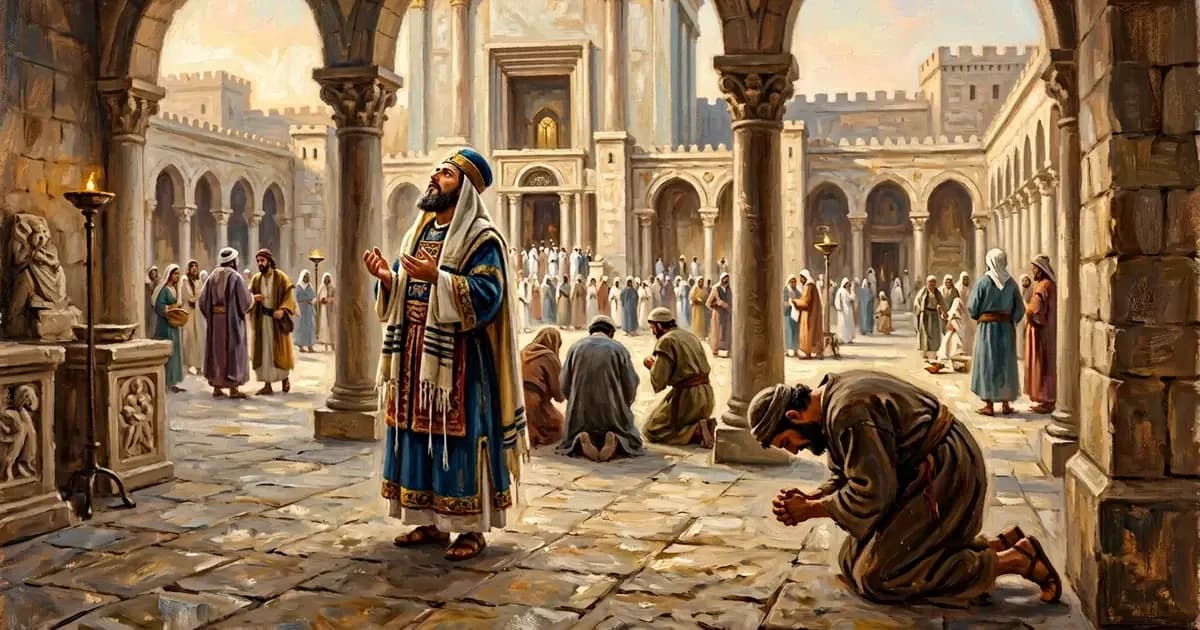
Jesus told this parable to those who were confident of their own righteousness and looked down on everyone else. The Pharisee stood and prayed, boasting of his good deeds; the tax collector stood at a distance, would not even look up to heaven, but beat his breast and said, 'Have mercy on me, a sinner.' Jesus concluded: the tax collector went home justified before God (Luke 18:14).

Focus
The parable does not say 'Pharisee bad, tax collector good' by profession, but exposes two attitudes: thinking you have enough merit versus knowing you need mercy. Righteousness here is linked to confession and humility, not boasting or comparison.
For everyone who exalts himself will be humbled, and he who humbles himself will be exalted.
— Luke 18:14b (according to various translations)Application
Each of us is invited to examine our prayer: are we 'listing' others' sins instead of acknowledging our own before God? Mercy is given to the humble who ask for grace.
Standing 'far off' and beating the breast: body language of confession
The tax collector did not push forward to show off his place; the gesture of beating the breast in Jewish culture indicated grief and public admission of sin — unlike the tone of 'I thank you that I am not like...' of the Pharisee. This article does not repeat the entire teaching on the Sacrament of Reconciliation; it simply stresses: the right disposition before God is the key point Luke wants listeners to take home.
In the temple and on social media
Today, 'I thank God I am not like them' easily becomes a post of judgment, a sarcastic meme, or a chat group dissecting others. The parable invites us to reverse the gaze: first ask 'where does my heart stand?' — close to love or near the judgment platform. This reading complements other articles on prayer life on the site without copying the long 'Lectio' framework.
Standing in the 'right place' at daily Mass
When attending communal Mass, we easily compare who is 'more devout' by seating or frequency of Communion. The parable reminds us: God does not grade the audience but looks at the heart. A small step is to pray silently before entering church, asking the Lord to guard us from the Pharisee attitude — even while externally keeping liturgical order.
Summary
- Told to those who were self-righteous and scorned others.
- Two kinds of prayer: boasting vs. begging for mercy.
- Justified = right attitude before God.
- The humble are exalted.