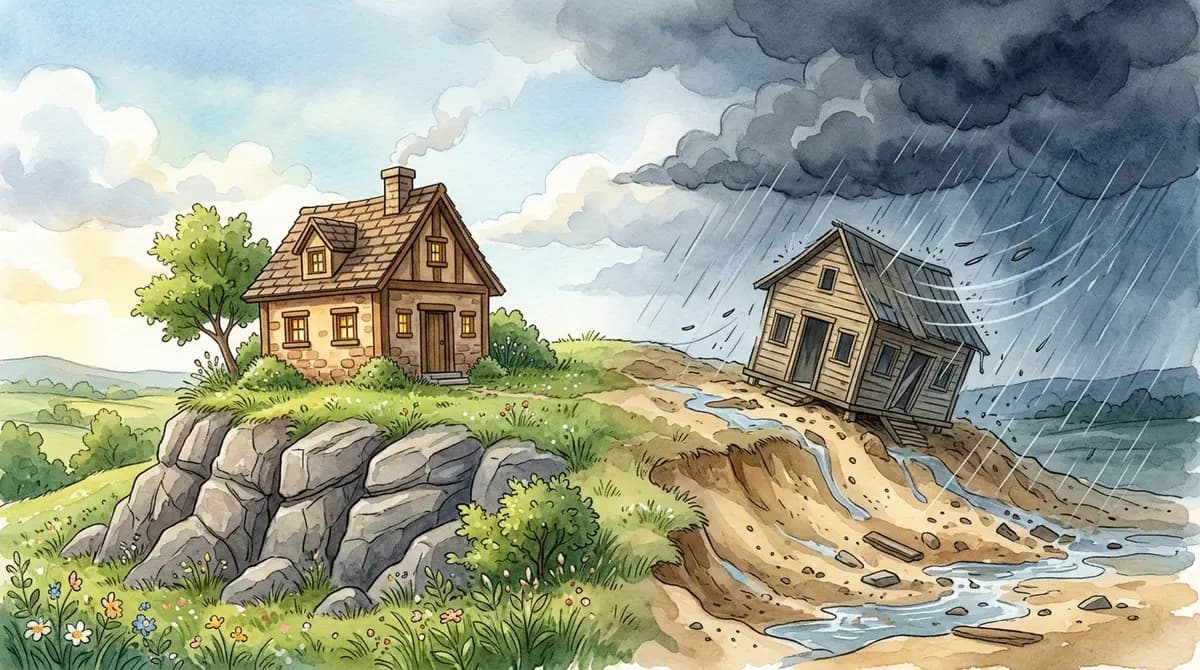
At the end of the Sermon on the Mount, Jesus tells: two men build houses — one on rock, one on sand without foundation. Rain falls, floods come, winds blow: the house on rock does not fall, the house on sand collapses completely. Jesus concludes: whoever hears these words of Mine and acts on them is like the wise man who built on rock; whoever hears but does not act is like the foolish man (Matthew 7:24–27). Luke 6:47–49 similarly describes with the image of digging deep and laying a foundation on rock.

Position in the Gospel
This passage comes after the warning about false prophets and knowing a tree by its fruit — the parable closes the sermon with an image of final testing. Commentaries (e.g., Jerome Biblical Commentary, papal exhortations) emphasize: "hearing" here refers to true discipleship, not merely admiring fine words.
Therefore, everyone who hears these words of Mine and acts on them will be like a wise man…
— Matthew 7:24 (various translations)No interpretation beyond the text
The parable does not describe the type of rock geologically or the details of baptism; it contrasts two ways of living in the face of the same "natural disaster" in the story. Rock symbolizes obedience to God's word; sand is lack of foundation — hearing superficially or praising with lips only.
Parallel Scripture
Set Matthew and Luke side by side: Luke emphasizes "digging deep" — the same idea as a solid foundation.
Application
Christian life requires doctrine and conduct united: prayer, charity, forgiveness — not just book knowledge. When crises come (illness, loss, temptation), the "house" of faith stands firm because it was built on daily practice. Gospel commentaries also note: hearing and doing includes both the written word of God and the word of the Church taught in faith — not separating "Scripture" from living in communion. The Sermon on the Mount ends with this parable: all the preceding sections on meekness, anger, adultery, oaths, love of enemies point to practice, not just hearing what is pleasant.
Summary
- Two builders — rock and sand.
- Rain, flood, wind test them.
- Hear and do = wise.
- Only hear, not do = foolish.