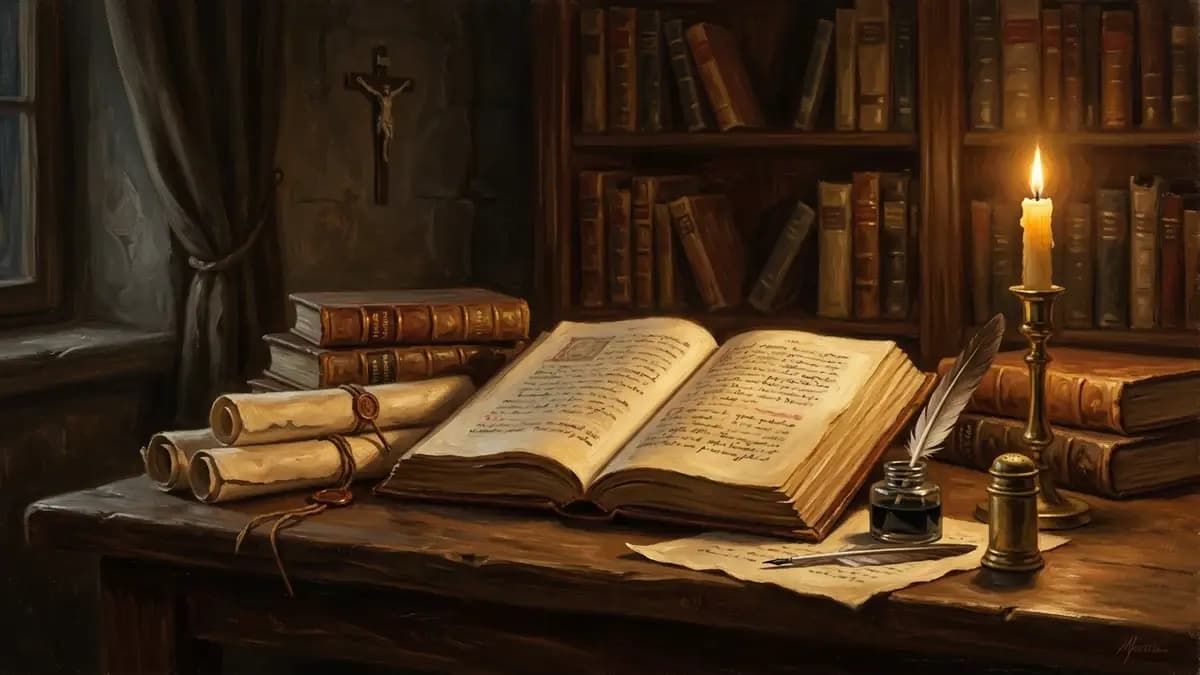
When people speak of the “Books of the Bible”, in the Roman Catholic Church it is generally understood as a library of 73 books (46 Old Testament and 27 New Testament) recognized by the Church as Sacred Scripture — that is, the Word of God recorded under the guidance of the Holy Spirit. This is not a single thick book written at once, but many works over many centuries, in Hebrew, Aramaic, and Greek, in various genres: narrative, law, poetry, symbolic revelation, epistles… Respected encyclopedias such as Britannica — biblical literature and Wikipedia — OT canon development help place historical debates about the canon in the context of Judaism and early Christianity; the Bible Gateway site is useful when you want to read multiple translations side by side and follow books in their traditional order.
Catholic Canon vs. Some Protestant Traditions
A point that often confuses Vietnamese readers is the number of Old Testament books: many popular English Bibles follow the Hebrew canon of 24 “books” (arranged as 39 books in translation) do not include the books collectively called deuterocanonical — for example Tobit, Judith, Wisdom, Sirach, Baruch, Maccabees… The Catholic Church and Eastern Orthodox Churches still retain these books in the Liturgy and catechesis. Understanding this difference helps you not to hastily conclude “this book is extra or missing” but to ask: who, when, and why recognized this list — a question that Wikipedia overviews or Church documents often answer from a historical perspective.
Practical Suggestion
When comparing canons, open the same passage (e.g., Sirach / Ecclesiasticus) in a Catholic and a Protestant version, read the book's introduction and editorial notes — you will see how scholars approach issues of language, authorship, and pastoral purpose differently.
Major Divisions: Old Testament and New Testament
The Old Testament recounts and interprets God's covenant with Israel: creation, patriarchs, Exodus, law, kingdom building, exile, restoration, and the hope expressed through prophets and poetry. The New Testament focuses on Jesus Christ — the Good News, the life of the early Church (Acts), the letters explaining faith, and finally the book of Revelation with its brilliant symbolic language. The division “Pentateuch — History — Wisdom — Prophecy” in the Old Testament and “Gospels — Acts — Epistles — Revelation” in the New Testament is a framework for systematic reading; the in-depth articles in this section will go into detail on each group.
“Lord, teach me your way, that I may walk in your truth.”
— Psalm 86:11 (reference meaning — please read the translation you are using)
Genre Determines Interpretation
A common mistake is to read every passage as if it were modern journalism or a science textbook. Meanwhile, the Psalms are poetry for prayer; Proverbs are sayings that encapsulate experience, not promises for each individual reader; Ecclesiastes combines narrative and philosophical dialogue; Revelation uses politico-religious symbolism from the Greco-Roman period. The Bible reading guides on BibleProject (videos and the “How to Read the Bible” series) emphasize this point: know the genre before drawing theological meaning. This also aligns with the spirit of reading God's Word in the Liturgy: the readings are chosen according to the liturgical season, not randomly.
Liturgy, Translations, and Parish Study
In Vietnam, readers can access Catholic translations (for example, the edition published by the Vietnamese Bishops' Conference) alongside Protestant versions to compare wording — but remember that the main purpose is to nourish faith within the Church, not to win arguments. Participating in parish Bible study, living according to the cycle of Scripture readings at Mass, and reading Catholic commentaries (e.g., publications with the imprimatur) are three sustainable ways for the “books” to become not just a list of names but daily spiritual food.
Summary
- Catholic canon: 73 books; main difference is the deuterocanonical books in the Old Testament.
- The Old Testament tells and interprets the covenant; the New Testament reveals Christ and the Church.
- Genre (law, poetry, prophecy, symbolism…) determines the reading method.
- Use encyclopedias and Bible portals as aids, but always return to context and the life of the Church.