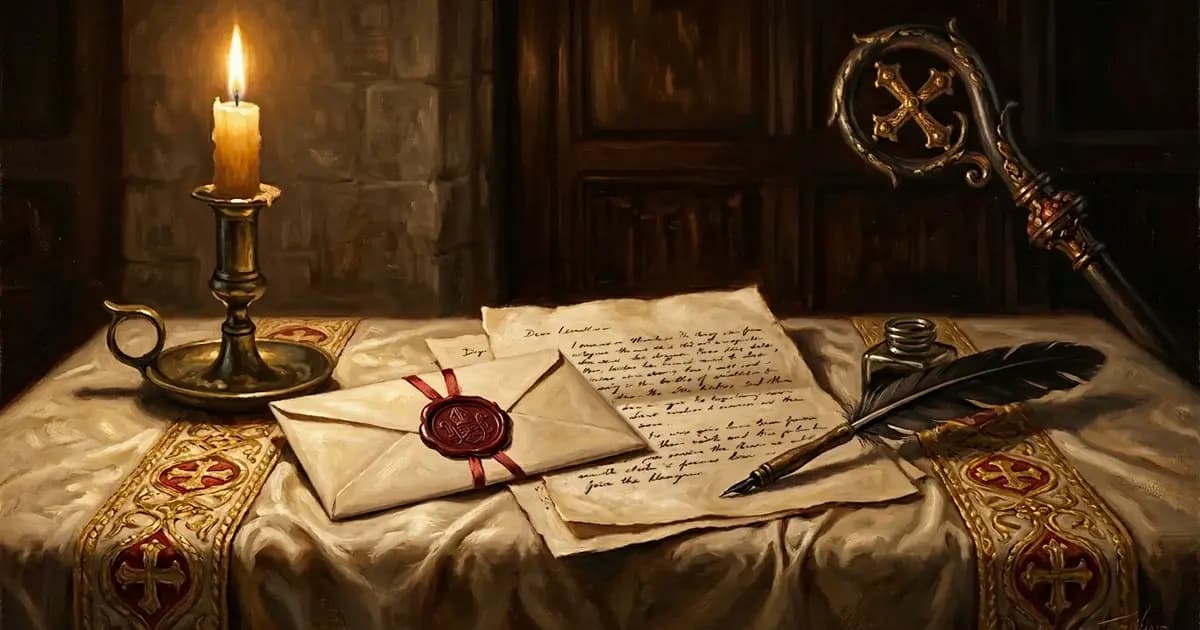
Pastoral letters, Lenten or Easter messages, and common documents of the diocesan bishop or episcopal conference are ordinary magisterium that help the People of God apply the faith to specific circumstances. This article helps readers read responsibly: knowing what is a witness of faith, what is pastoral guidance, and what is mere general exhortation. See the Church Leadership section, article on bishops, episcopal conference, and co-responsibility of the laity; compare with vatican.va.

What is Ordinary Magisterium?
In Catholic doctrine, the bishop is the teacher of faith who has been ordained; the documents he issues within his authority can nourish the faith of the diocese. Not every interview or blog post carries the same weight: distinguish official documents (with signatures, diocesan context, date) from social statements. The ordinary magisterium is not automatically equivalent to a universal definition, but it demands religious submission of the will and intellect to the teaching of the shepherd (see the CCC on faith and reverence).
Reading with the Catechism and Scripture
A pastoral letter is effective when the faithful bring Scripture and the CCC to compare: not to "find fault" with the shepherd, but to understand deeply and ask questions in communion. The article priests and Presbyterorum Ordinis reminds of the foundational role of priests in teaching; the bishop's letter often entrusts priests and catechists to implement it concretely. If there is a difficult passage, the first recourse is office hours or a catechetical class, not anonymous comments.
Common Letter of the Conference and Private Diocesan Letter
It is necessary to distinguish the national bishops' conference letter and the diocesan bishop's letter: scope, authority, and audience differ. Read the article on episcopal conferences to understand the framework. When two documents have different emphases on the same topic, do not hastily conclude a "contradiction": it may be different applications in context; the local bishop or priest can help explain in communion.
Pastoral Letters on Social Media
When seeing a quote from a letter on Facebook or a message, verify whether it is the full text with signature and date. A quote lacking context can easily distort the bishop's meaning. If sharing, include a link to the diocesan chancery or the official PDF so others can read the entire document.
In Parish Life
A pastoral letter often suggests specific good works: additional prayer, charity, education, care for the environment, or community reconciliation. The faithful respond by practicing communion, not just reading it through. Contact the pastoral council if you wish to propose ways to implement it suitable to the parish context — that is the path of communion, not an imposition from outside.
Conclusion
The pastoral letter is a bridge between the common faith of the Church and the life of the diocese today. Read it with Scripture, the CCC, and the articles in this section; avoid reading it detached from the shepherd or only through intermediaries lacking context.
Summary
- Pastoral letters belong to ordinary magisterium and have a certain theological weight.
- Distinguish official documents from statements of a different level.
- Read together with the CCC and Scripture in communion.
- Distinguish conference letters from diocesan letters.