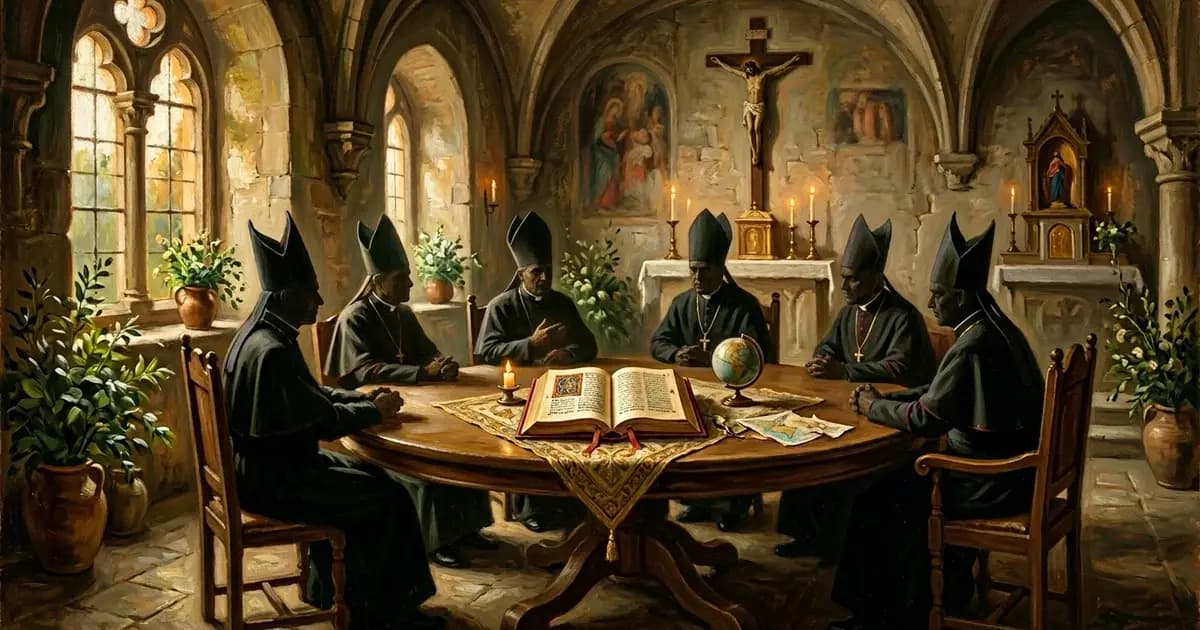
Bishops' Conference (episcopal conference) is where the bishops of a country or region meet and — when legal conditions are met — issue common pastoral documents. This article helps distinguish this role from the authority of each diocesan bishop, avoiding the notion of a “regional super-bishop.” Read alongside the Church Leadership section, the college of bishops, and the pastoral letter of bishops; reference the law and vatican.va.

What is a Conference in the Legal Framework?
Canon law establishes the formation and operation of bishops' conferences as a structure of communion among dioceses in the same region. They can compile local catechisms, liturgical guidelines consistent with the Holy See's permission, or issue social pastoral statements — within the limits of delegated authority. This is not a multinational corporation: each bishop remains the proper shepherd of his own diocese before God and the flock.
Does Not Replace the Diocesan Bishop
Many misunderstandings claim that “the conference decides on behalf of the diocese.” Theological and legal reality emphasize co-responsibility and coordination: the conference helps them address national issues (education, charity, environment) that a single diocese can hardly manage alone. The final decision in the diocese still belongs to the local bishop within the framework of law, except for areas expressly entrusted by the Holy See or by law to the conference.
Relationship with the Lay Faithful and Common Pastoral Care
Conference documents generally aim at nourishing faith and supporting local pastors, not replacing the parish in directly managing the life of the faithful. The laity should read the common letter together with the article on co-responsibility and the directives of the diocesan bishop. When there is a conflict between regional documents and local guidelines, the channel of dialogue is the bishop and the levels of communion, not public debate lacking context.
Transparency and Safety in the Modern Context
Many conferences issue policies on protection of children and vulnerable persons, in coordination with civil regulations. The theme of pastoral responsibility is further explored in the article on transparency and accountability. Common point: authority must go hand in hand with accountability before the People of God.
Charity, Education, and Collaboration Among Dioceses
The conference often helps dioceses share materials for charity, relief, or approved catechetical texts — saving human resources and ensuring quality. The laity can ask their parish: Is this course or book recommended at the diocesan level or at the conference level? A simple question reduces misunderstandings about authority and avoids treating all documents alike.
Reading Responsibly
When you see a news headline about “bishops’ conference,” seek the original text on the conference's website or vatican.va, not only social media excerpts. Compare it with the summary article on canon law structure if you want to understand which authority belongs to whom — that article is no substitute for a canon lawyer, but it provides a reading framework.
Summary
- Bishops' conference serves communion among dioceses in a region.
- Does not erase the role of the local bishop.
- Common documents should be read alongside diocesan directives and the co-responsibility of the laity.
- Consult official sources when following news.