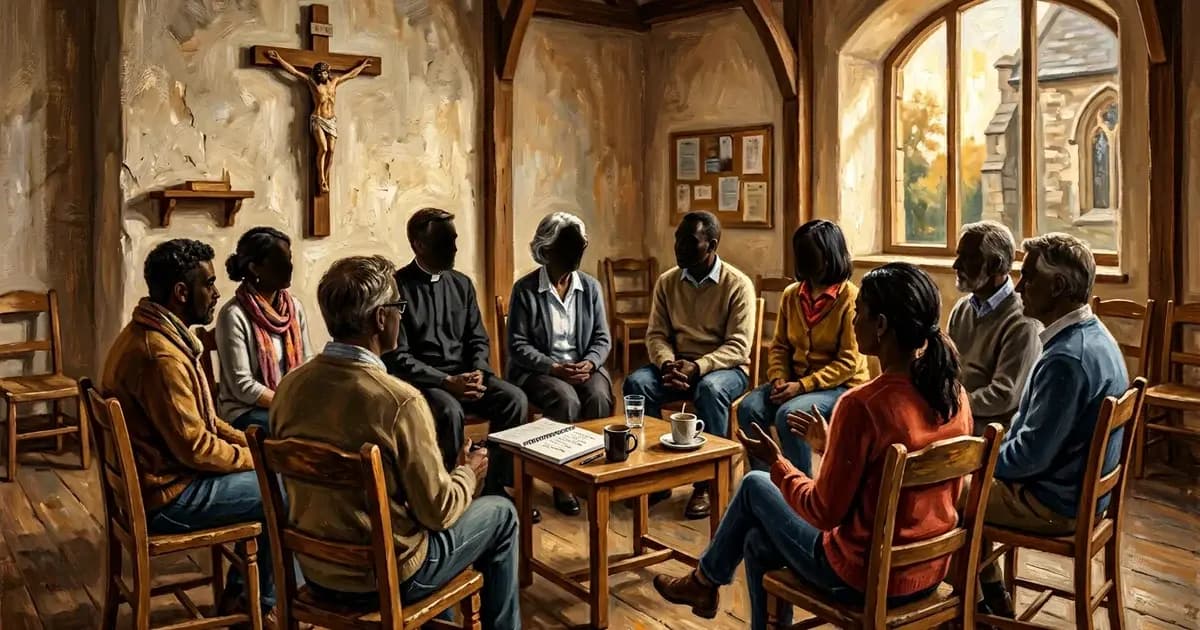
The parish pastoral council (or equivalent according to local law) is where laypeople and clergy discuss and propose matters concerning apostolic life, charity, and worship — typically serving a consultative role. This article helps avoid misunderstanding the “council as an electoral parliament” replacing the priest. Read alongside the section on Church Leadership, lay co-responsibility, lay consultation, and the article on priests; refer to canon law through the summary article on the structure of canon law.

Consultation, not supreme authority of the parish
Canon law and practice generally place the pastoral council under the authority of the pastor (or bishop): members help to see the needs of the community, propose plans, and reflect the voice of the laity. The final decision in areas under the pastor's authority still belongs to the legally responsible person according to the law — the council does not “vote in place of the sacred office.” Understanding this correctly helps avoid disappointment or false confrontations.
The value of consultation in communion
Vatican II and subsequent teachings emphasize listening to the People of God: it is not about polling public opinion to replace faith, but discovering the gifts of the Holy Spirit within all members of the Church. The pastoral council is a specific channel of that spirit in the parish. Participation requires humility, preparation before meetings, and respect for the sacrament of Reconciliation or private life that should not be “council-ized.”
Distinction from the finance council or parish council
Many parishes have a finance council, parish council, or other ministry groups. Each structure has its own purpose and limitations; they should not be merged into a “super committee” that causes duplication or loss of accountability. The pastor and diocese often issue clear regulations — read the regulations before interpreting them online.
When there is tension
If disagreements arise, prioritize direct dialogue with the pastor in charity, avoiding attacks on dignity. Serious issues regarding safety or law have their own channels — see the article on transparency and pastoral accountability. The pastoral council does not replace canonical processes when diocesan intervention is needed.
Preparing for meetings and following up after meetings
Effective members often read materials in advance, bringing specific data or experiences rather than just vague feelings. After meetings, pray for the pastor's decisions and support the parish in implementing what has been agreed upon — the council does not stop at minutes if there is no real life of communion.
Conclusion
The pastoral council serves communion and consultation, helping the pastor shepherd better. Read canon law, diocesan regulations, and related articles in this section; do not idolize “pure democracy” nor disregard the voice of the laity.
Summary
- The pastoral council typically serves a consultative role, under the authority of the pastor.
- The value lies in communion consultation, not replacing the sacred office.
- Distinction from other councils in the parish.
- Tension should be handled in charity and through the proper channels.