On vatican.va and the Catechism (usually §871–896), the "leadership" of a bishop is a theological mission in communion, not mere governance. This article summarizes key points from Lumen Gentium (11/21/1964) and the CCC; reading the full original texts is necessary for deeper study.

Lumen Gentium and the Church as Communion
The Constitution places bishops within the context of "the Church as a sacrament of communion." They do not create a "power career" for themselves but are placed into an already-given mission: continuing the apostles in the episcopal college in communion with the successor of Saint Peter. When reading LG, one should consider the whole chapter on the sacred hierarchy, not isolated passages.
Apostolic Ministry
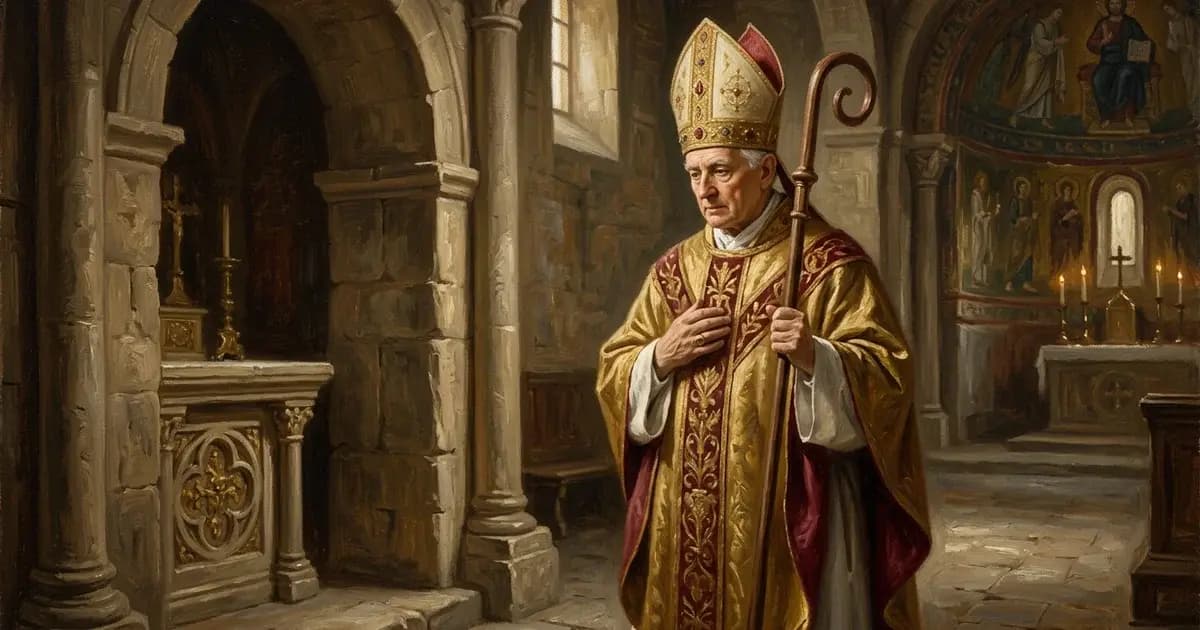
The CCC systematizes: the bishop shepherds the flock as Christ entrusted to the apostles. Apostolic ministry is not merely a chain of hands laid on hands but a continuous same mission. It must be viewed in three dimensions: with the Pope, with the episcopal college, and with priests, deacons, and the entire People of God.
Scripture and the Image of the Shepherd
Magisterial teaching often connects the episcopal office with passages such as the Lord entrusting the sheep (Jn 21) and Paul's farewell to the elders of Ephesus (Acts 20): episkopein is linked to guarding the flock and self-sacrifice, not mere power. The CCC places the office in this context before using administrative language. The ordination liturgy and the memory of the diocese remind us: the diocese is not a commercial "franchise" but a portion of the People of God entrusted to the successor of the apostles.
Sanctifying, Teaching, Pastoral Governance
The bishop shares in the functions united to Christ Shepherd – Teacher – Sanctifier: proclaiming the Gospel, celebrating the liturgy, leading the community. Official teaching (under the conditions of law and doctrine) is a witness of faith in Communion, not identical to every personal statement.
Communion with Rome
The authority of the Pope and the authority of the diocesan bishop are arranged in communion, not in opposition as in politics. Avoid two extremes: a "local boss" cutting off Rome, or blurring the pastoral responsibility before the sheep entrusted. Episcopal conferences (e.g., USCCB) issue guidelines — read them together with the CCC and LG, not replacing the Holy See or the local bishop.
Lay Faithful Reading the Magisterium Today
It is advisable: (1) note the CCC numbers / Council references; (2) read within the whole magisterial context; (3) exercise charity and reasonable obedience regarding what pertains to official authority. Authority serves and calls for humility — service, not domination in a worldly sense.
Official portals do not replace the parish priest or diocesan bishop, but they provide public texts for reference. When a blog or social media says "the Church teaches," one should go back to the CCC paragraph or Council document; if the source cannot be traced (or to Sacred Scripture in living Tradition), caution is needed.
Conclusion
Theological sequence: Church as communion → continuous apostolic mission → sanctifying, teaching, and governing in the light of Christ the Shepherd. Consult Lumen Gentium, Christus Dominus (1965), and the CCC on vatican.va or an approved edition.
Primary References (check original texts)
- Constitution Lumen Gentium on the Church — Vatican II (1964), especially the numbers on bishops and the episcopal college.
- Catechism of the Catholic Church, section on the hierarchical structure and the episcopal office (§871–896 depending on edition).
- vatican.va for comparison with official texts.