On His final ascent toward Jerusalem to accomplish His Paschal sacrifice, Jesus enters the ancient oasis city of Jericho, a bustling commercial crossroads near the Jordan River (Luke 19:1–10). There lives Zacchaeus, a 'chief tax collector' (architelones) who had grown wealthy by overseeing customs collection under Roman occupation and was consequently ostracized by his fellow Jews as a public sinner and traitor to the covenant. Yet beneath his worldly affluence, Zacchaeus harbors a restless spiritual hunger to 'see who Jesus was' (Luke 19:3). In Catholic theology, the conversion of Zacchaeus is the crowning narrative of divine mercy in the Gospel of Luke, illustrating how Christ's preventative grace seeks out the lost sinner and transforms interior contrition into concrete works of charity and reparative justice (Catechism of the Catholic Church, CCC 545, 1459, 2412).
The Sycamore Tree and the Merciful Gaze of the Savior
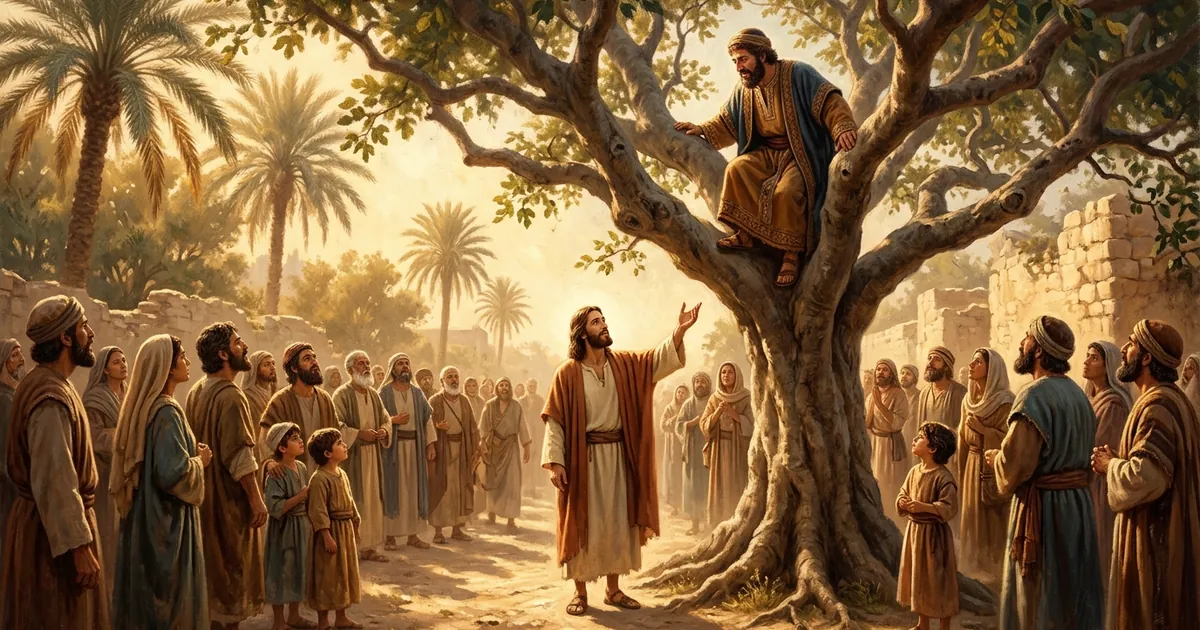
Because Zacchaeus is short in stature and blocked by the hostile crowd, he runs ahead like a child and climbs a wide-branching sycamore-fig tree along the road. As Saint Augustine observes in his homilies on the New Testament, Zacchaeus overcame human respect and worldly pride by ascending the tree of humility—a prophetic figure of the wood of the Cross. Before Zacchaeus could truly behold the Lord, however, he was already beheld by God: when Jesus reaches the spot, He looks up (anablepsas) and calls him by his Hebrew name, Zakkai—meaning 'pure' or 'righteous'—summoning him to become what his name signifies.
Jesus' words, 'Zacchaeus, come down quickly, for today I must stay at your house' (Luke 19:5), contain the theological verb dei ('it is necessary'), which Saint Luke consistently uses for the Father's salvific decree. Echoing the liturgical Psalms of praise (Psalm 145:8–9) proclaimed on this Sunday of Ordinary Time, Christ reveals that God's mercy always precedes human initiative. Prompted by the Holy Spirit—the same Spirit who overshadowed the Virgin Mary so that the Savior might dwell among us—Zacchaeus comes down in haste and welcomes the Lord into his home with overflowing joy.
"So he ran ahead and climbed a sycamore tree in order to see Jesus, who was about to pass that way. When he reached the place, Jesus looked up and said, 'Zacchaeus, come down quickly, for today I must stay at your house.' And he came down quickly and received him with joy."
— Luke 19:4–6 (New American Bible, Revised Edition)
Almsgiving, Fourfold Restitution, and Salvation Entering the House
While the self-righteous bystanders grumble that Jesus has gone to stay with a sinner, Christ's table fellowship awakens a radical conversion in his host. Standing before the Lord, Zacchaeus publicly pledges half of his possessions to the poor and promises fourfold restitution to anyone he has defrauded (Luke 19:8). Whereas Leviticus 6:5 and Numbers 5:7 required a voluntary penitent to restore stolen goods plus one-fifth, Zacchaeus voluntarily embraces the strict fourfold penalty prescribed in Exodus 22:1 for a thief caught in the act (cf. 2 Samuel 12:6).
"But Zacchaeus stood there and said to the Lord, 'Behold, half of my possessions, Lord, I shall give to the poor, and if I have extorted anything from anyone I shall repay it four times over.' And Jesus said to him, 'Today salvation has come to this house because this man too is a descendant of Abraham. For the Son of Man has come to seek and to save what was lost.'"
— Luke 19:8–10 (New American Bible, Revised Edition)
As the Catechism of the Catholic Church teaches regarding the Sacrament of Penance and the Seventh Commandment (CCC 1459, 2412), forgiveness of sins requires that the penitent repair any injustice committed against a neighbor by returning stolen goods and making satisfaction. By detaching his heart from mammon, Zacchaeus is restored to his full dignity as a true son of Abraham, and his household becomes a sanctuary of God's saving presence.
Key Takeaways
- Preventative Grace of Christ: Zacchaeus' desire to see Jesus was already a response to the Good Shepherd, who looked up first and called him by name (CCC 545).
- Humility Overcomes Pride: Climbing the sycamore tree represents setting aside social prestige and human respect in order to encounter the crucified and risen Lord.
- The Divine 'Today' (Semeron): Jesus' declaration, 'Today I must stay at your house,' manifests the urgent hour of grace that admits no delay in conversion.
- Repentance Proved by Restitution: Zacchaeus' gift of half his wealth to the poor and fourfold repayment exemplifies Catholic moral teaching on almsgiving and reparative justice (CCC 1459, 2412).
- Universal Mission of Mercy: Luke 19:10 summarizes the entire Gospel: 'The Son of Man has come to seek and to save what was lost.'
Welcoming the Lord into the Home of Our Hearts
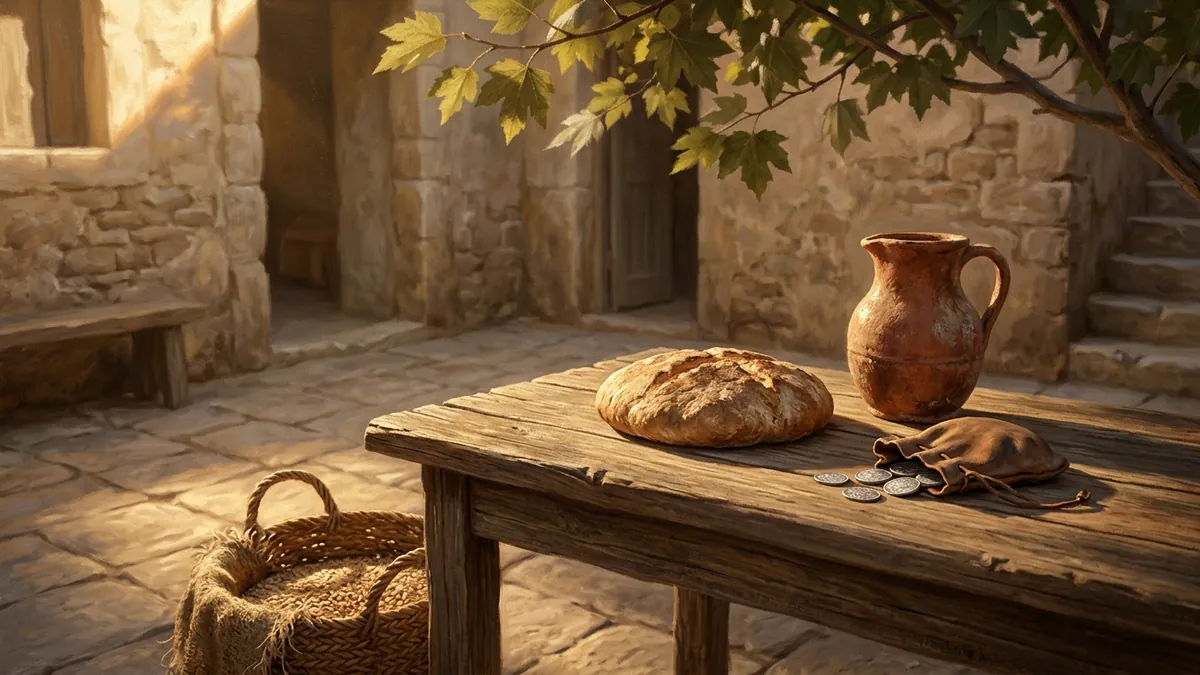
How does the encounter in Jericho challenge Christian discipleship today? Like Zacchaeus, we are often hindered by the 'crowd' of worldly distractions or the smallness of our spiritual vision. Yet whenever we climb above our attachments through prayer and open the door of our hearts in the Sacraments of Reconciliation and the Eucharist, Jesus enters our house without reproach. Guided by the Holy Spirit and the maternal intercession of Mary, Mother of Mercy, authentic communion with Christ always bears fruit in generosity toward the poor and justice toward every neighbor.