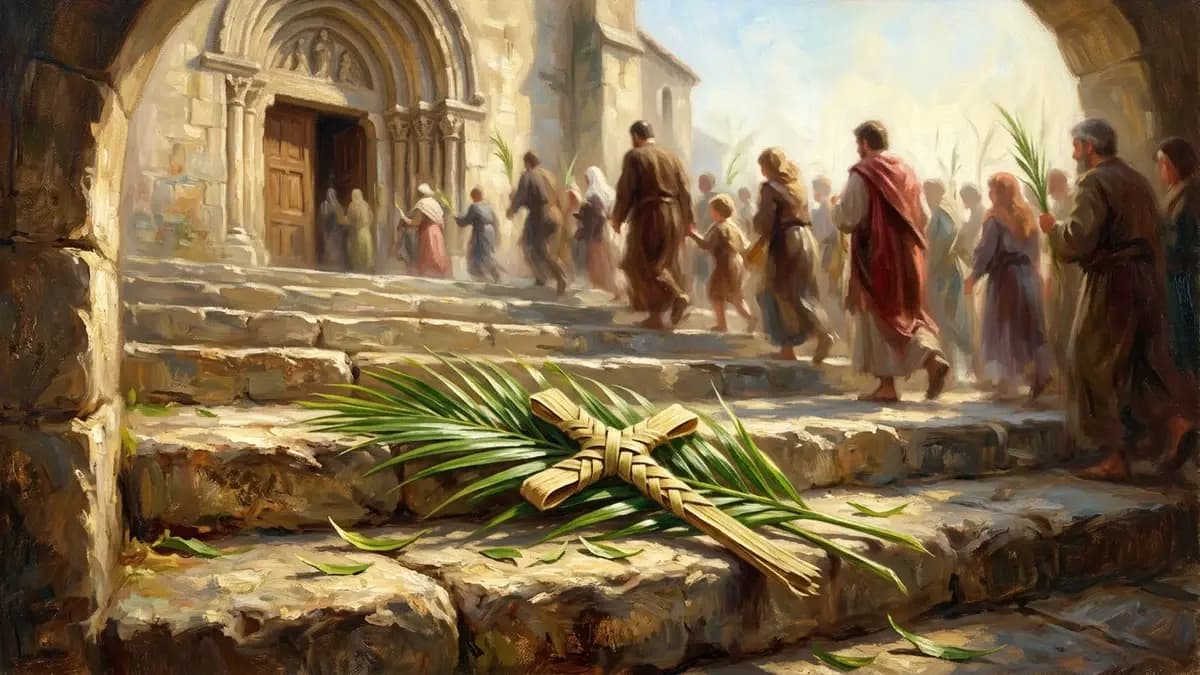
Holy Week is the week of the Passion and Resurrection. Palm Sunday shouts “Hosanna” and the Proclamation of the Passion; the following days meditate step by step toward Holy Thursday (the Last Supper, institution of the Eucharist and the ministerial priesthood), Good Friday (commemoration of the Cross), and Holy Saturday — silence in the bowels of the earth, awaiting the Easter Vigil.
The Sacred Triduum
The Triduum is one single mystery spanning three days: the Evening Mass of the Lord’s Supper on Thursday begins; throughout Friday and Saturday we live in sacrifice and silence; until the Easter Vigil, the Paschal candle and baptismal water (if any) proclaim the Lord is risen. It is encouraged to participate fully in the parish celebrations — these are the “golden hours” of the Christian life.

Easter: the hinge of faith
Easter is not merely “spring symbolism” but the confirmation that Jesus rose bodily — the foundation of all apostolic preaching (1 Cor 15). The Easter season begins at the Vigil and continues for fifty days until Pentecost.
Physical and spiritual preparation for Holy Week
The faithful are encouraged to read beforehand the Passion narrative from the Missal, arrange time off to attend the Evening Mass on Thursday and the afternoon liturgy on Friday, and limit travel plans that coincide with the Sacred Triduum if possible — not as a strict rule but to make room for the mystery. The elderly or those with many children should ask the parish about seating, service times, and bilingual liturgies if needed.
Easter with a small community or newcomers
If you are new to the faith or living far from family, do not compare with “childhood Christmases” online: the Easter Vigil is where you are welcomed into a larger family. Bring questions for the pastor after Mass, help with candles or the choir — small steps that make Holy Week not just a story “heard” but being drawn into the story.
Holy Week and work: ask permission, not apologize for faith
Many people have night shifts or business trips. If you cannot attend all celebrations, prioritize Good Friday and the Easter Vigil if you can only choose a few, and seek pastoral guidance — do not justify skipping everything. The Lord knows your circumstances; what matters is intentionally making room for the mystery rather than letting the work schedule consume it all.