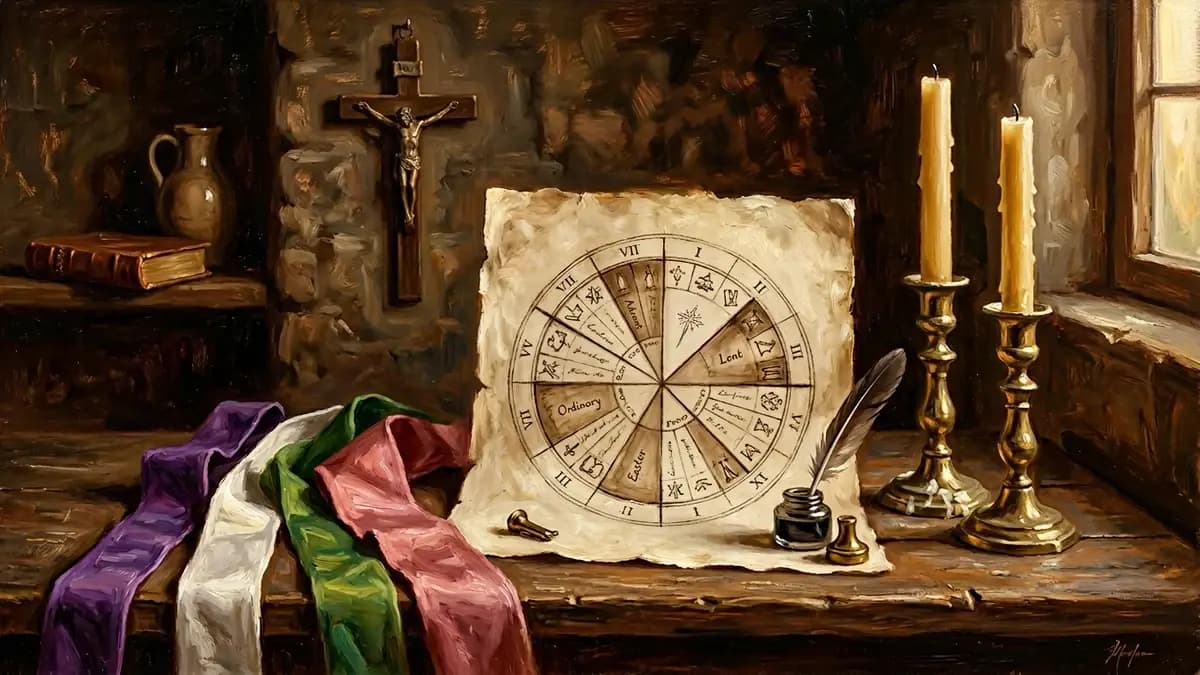
The liturgical year (or Church year) is how the Church relives the mystery of Christ through time: not a mechanical repetition of history but a making present of grace — each year we are invited into the same story: waiting, birth, cross, resurrection, and mission in the Holy Spirit. Desiderio desideravi and liturgical documents emphasize that the Liturgy teaches faith through signs: the Word of God, vestment colors, silence, hymns.
Principal Seasons in the Roman Tradition
Advent prepares for Christmas; Christmastide celebrates the Incarnation and continues until the Baptism of the Lord; afterward comes a period of Ordinary Time, then Lent, Holy Week with the Sacred Triduum, Easter Season extending to Pentecost, then Ordinary Time continues until the next Advent. Some major feasts (like Easter) are movable according to the lunar cycle — the parish usually publishes the calendar; always consult the diocesan ordo.
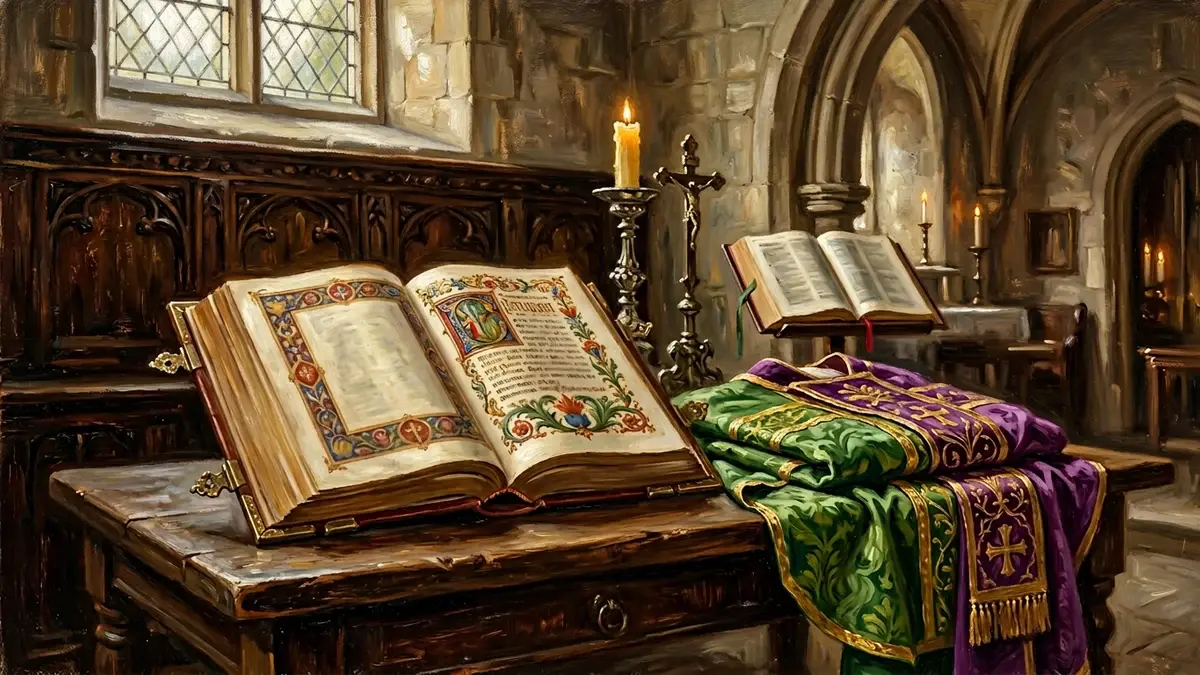
What Do Vestment Colors Signify?
Purple often suggests penance and waiting (Advent, Lent); white or gold for feasts (Christmas, Easter, some Marian feasts and non-martyr saints); red for the blood of martyrs and the Holy Spirit; green for hope and growth in Ordinary Time; rose on certain Sundays of Advent and mid-Lent — joy breaking into waiting. Colors are a visual language; do not see them as magic but as faith formation.
Years A, B, C and Digital Ordo Apps
Sunday Gospels cycle through Year A (Matthew), B (Mark), C (Luke) with John interspersed — so each year the “tone” of the readings is slightly different. Legitimate ordo apps allow you to see the day’s color, optional memorials, and readings when traveling. This helps busy people remain in sync with the global community praying the same Scripture passages.
When the Two Calendars (Civil and Liturgical) Collide
Lunar New Year, national holidays, or family anniversaries sometimes fall during Lent or the Sacred Triduum — this cannot always be avoided. Ask your pastor how to prioritize the sacraments and communion; Catholic spirituality is more flexible than we think when clear pastoral guidance is given.
Living the Liturgical Year at Home
- Read the Sunday readings before Mass; have a brief family discussion.
- Light an Advent wreath, observe Lenten silence according to health.
- Participate in parish rituals: communal penance, novenas, service to the poor according to the season.