On modern Bible study platforms, covenant (covenant) is often presented as the framework of the narrative: God establishes a covenant, keeps His promises, and invites the people to respond with faithfulness. BibleProject — Themes has guides on covenant and kingdom; Bible Gateway Topics helps quickly find key passages. The proper thematic study method is: list the covenants, place them in historical context, and then track how the New Testament reinterprets the Old Testament — especially in the Gospel of Luke, the Letter to the Hebrews, and the Letter to the Galatians.

Chains of Covenant in the Old Testament
The covenant with Abraham promises land and blessings for all nations. The Sinai covenant establishes laws and worship practices for Israel. The covenant with David promises a lasting dynasty. The prophets proclaim the new covenant — laws written on hearts, God present with His people. When studying the theme, draw a timeline and note each covenant: who the parties are, the main promise, and the external sign (circumcision, temple, etc.).
Behold, the days are coming — declares the Lord — when I will make a new covenant with the house of Israel and the house of Judah.
— Jeremiah 31:31 (reference)New Testament: the blood of Christ and the banquet
Jesus uses covenant language at the Last Supper: “this is the blood of the covenant”. The Apostles see Israel's unfaithfulness and God's faithfulness focused in one person — Jesus Christ — and the Church as the new covenant people including the Gentiles. Read Exodus 24, Jeremiah 31, and Luke 22 / Matthew 26 in parallel to see the continuity.
The same God strengthens them among you, as has been proclaimed in the Scriptures of the prophets, for all nations of every land to believe and obey.
— Romans 16:26b (reference)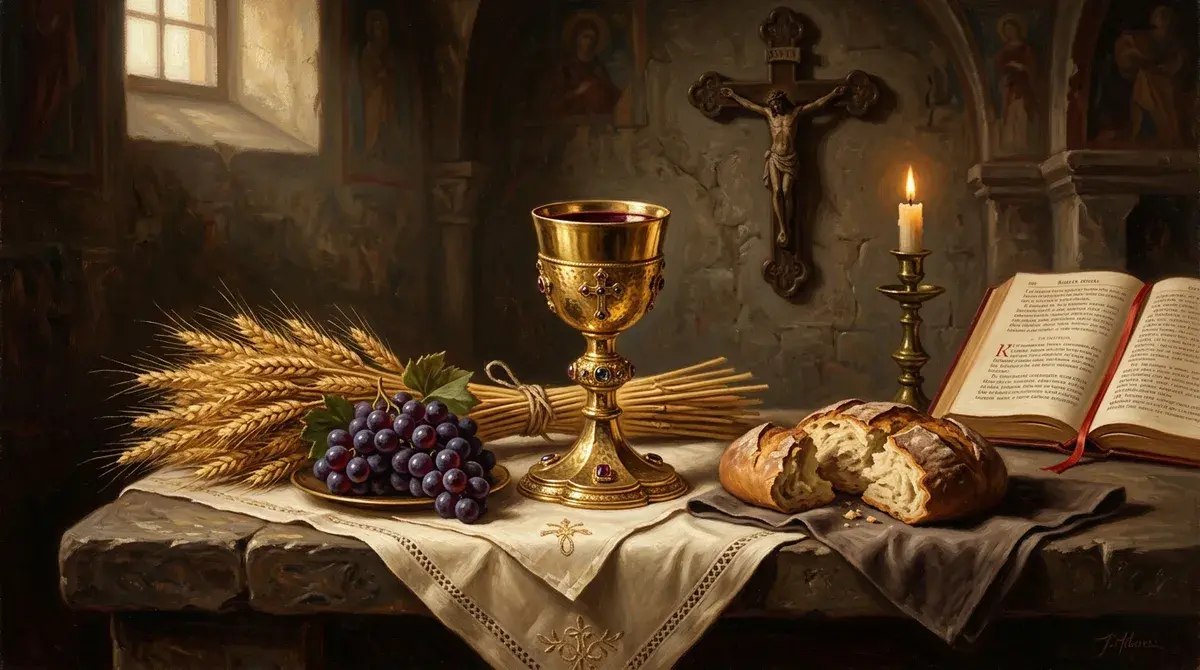
How to read the theme without distortion
Avoid two extremes: (1) viewing the Old Testament merely as “hard law” that is useless; (2) viewing the New Testament as “love” without moral standards. Both distort Scripture. The covenant theme teaches: God is faithful, grace is prioritized, and holy living is the response in the Holy Spirit. Conclude by participating in the Holy Mass / Lord's Supper (if you belong to a tradition with the Sacrament) as a remembrance of the covenant.
Exercise
Write four boxes: Abraham / Sinai / David / New — each box with 3 sentences summarizing God's promise and humanity's response.
Summary
- The covenant is the narrative framework: promise, faithfulness, response.
- Old Testament: Abraham, Sinai, David, hope for the new covenant.
- New Testament: Christ, the blood of the covenant, the Church of all nations.
- Continuity; avoid diminishing the Old Testament or simplifying the morality of the New Testament.