Amen (אָמֵן) has a root meaning close to certainly, so be it — the congregation agrees with the prayer and with the Word of God. Alleluia is a transliteration of the Hebrew hallelu-yah — “praise Yah”: a special expression of joy associated with the Psalms and Easter. During Lent, in some places, Alleluia is omitted to remember repentance — then joyfully returned on Easter night.
Hosanna: save us, bless us
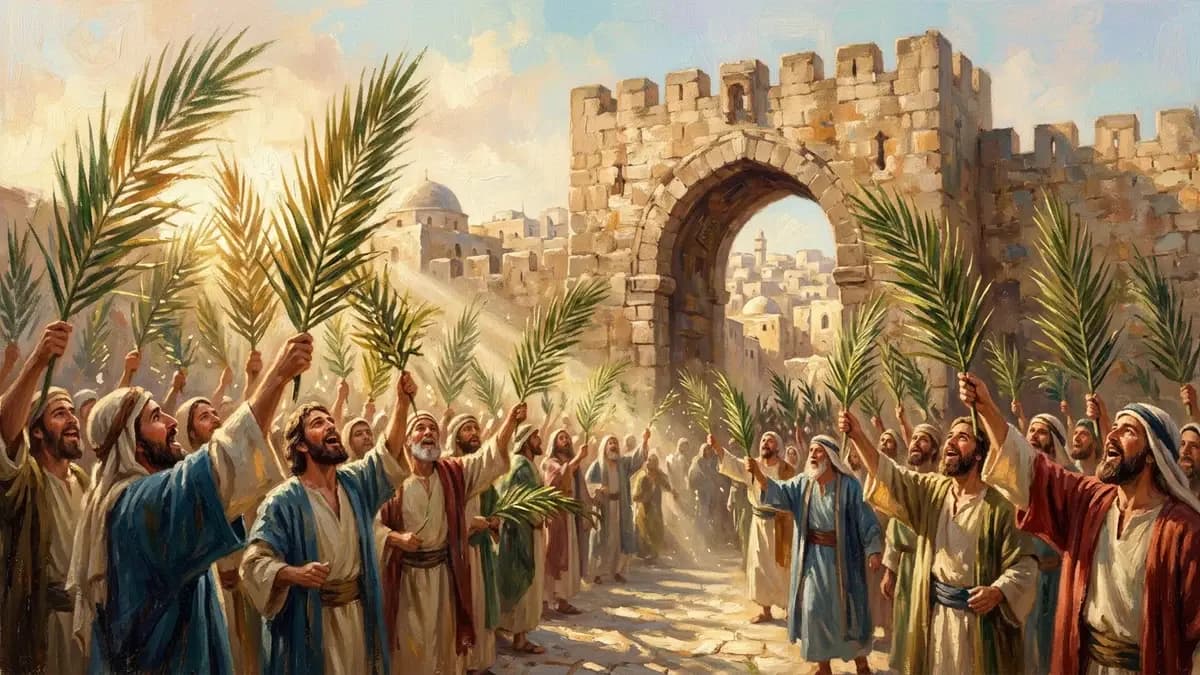
Hosanna comes from the Hebrew phrase hoshia na — “save us” / “grant us salvation” — becoming a shout of joy as the people welcomed the Messiah into Jerusalem (see the Gospel of Palm Sunday). It is not just “joyful” but a plea for God to grant salvation through the One who comes.

Maranatha and other expressions
Maranatha (in the letters about the Lord's return) is often understood as “Lord, come!” or “The Lord has come” depending on grammatical analysis — the commentator helps to clarify. The pastoral point: these words are not magical but invite communion with the prayer of the whole Church through time.
Amen in family and community life
When the congregation responds Amen after the prayer, it is in unison with the leader — teaching children that prayer is not just a personal monologue. Alleluia before the Gospel reminds the entire assembly: we stand before the Word as before a joyful event. When Alleluia is temporarily omitted during Lent, this is an opportunity to explain to the younger generation why silence has meaning — not to “forbid joy” but to make room for deeper repentance.
Hosanna and local rituals
In many Vietnamese parishes, Palm Sunday combines the custom of palm leaves or flowers — different symbols but all connected to the shout for salvation in the Gospel. This article intentionally does not repeat the Gospel text; please open the book to continue the story into the holy city.
Keeping Hebrew words from becoming “magical incantations”
Amen, alleluia, hosanna are the prayers of the congregation, not magical formulas. When teaching children, explain the meanings simply enough for them to participate consciously; when adults learn more deeply, connect the words to the Jewish scriptures and the Psalms — understanding the source to love the liturgy rather than to boast of words. This is the common spirit of the terminology articles on the site.