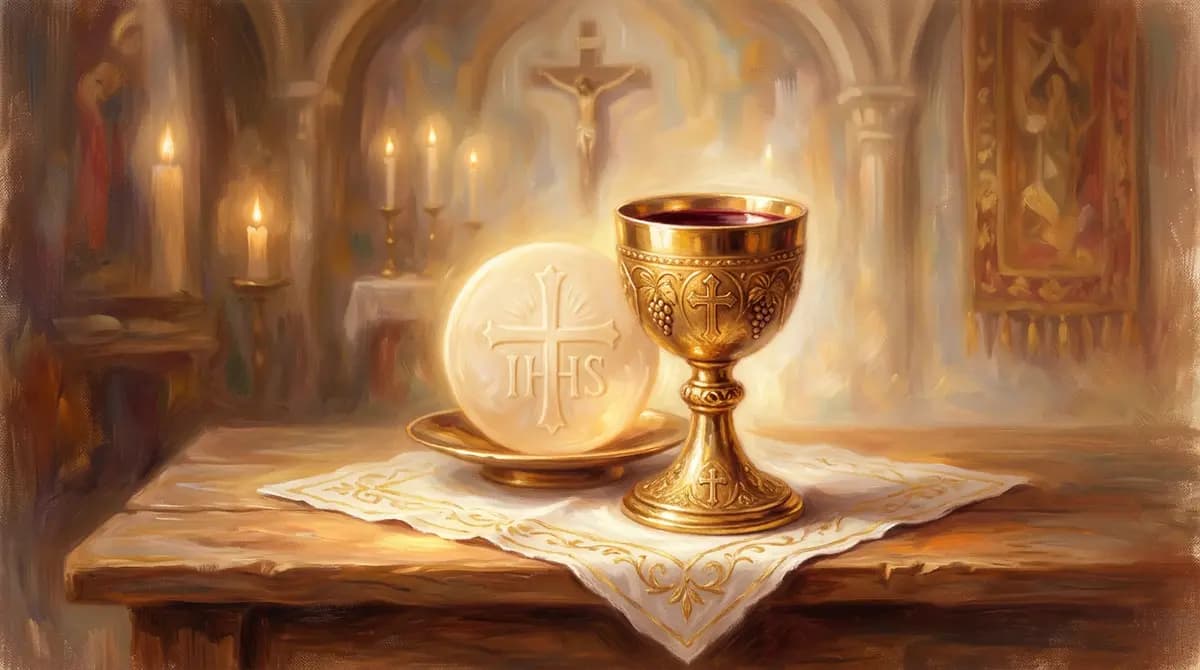
Charis (χάρις) is often translated as grace: not a “reward” but the free gift of God — love that exists and acts before any merit of ours. Eucharistia (εὐχαριστία) is thanksgiving, a blessing; in the New Testament, Jesus gives thanks when consecrating bread and wine (see the accounts of the Last Supper). The two terms are not identical but theologically compatible: receiving grace leads to gratitude; the deepest gratitude is gathered in the Sacrament that the Church calls the Eucharist — the Greek eucharistia.
Charis in Paul's letters
Saint Paul emphasizes encompassing grace (Rom 5–6; Eph 2): we are saved as a gift, to live for God. Charis does not eliminate moral responsibility but empowers us to live according to the Gospel. When we ask for “grace,” we are seeking charis — inner strength and communion with God.
Eucharistia in the Liturgy
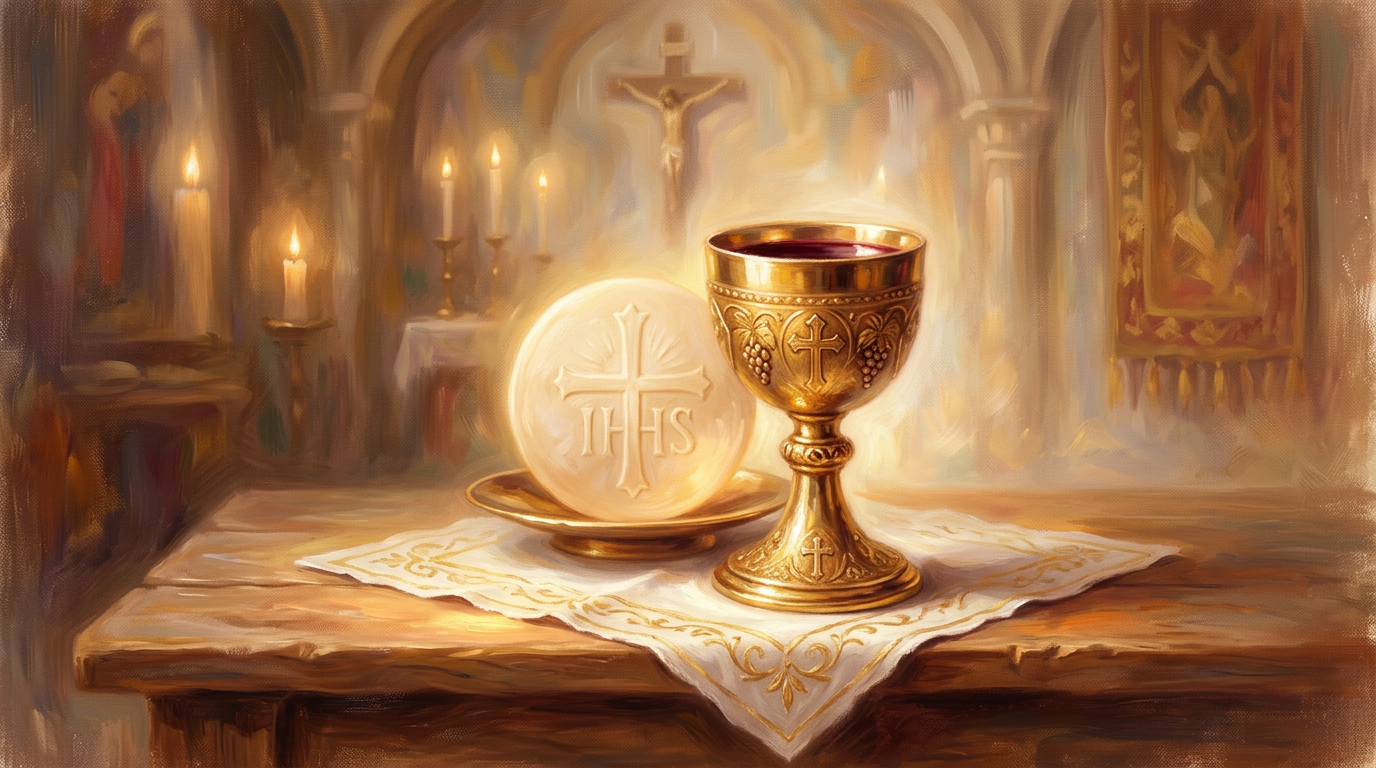
The Mass is the thanksgiving sacrifice of the whole body of Christ, head and body. Communion is not just “receiving physically” but sharing in grace and uniting with the Lord and one another. Understanding from the root helps us not to reduce the Eucharist to a whimsical symbol but to see the mystery that the Church solemnly celebrates.
Avoiding language confusion
Some separate charis from the life of the commandments; Catholic teaching states that grace transforms and guides. There is also a tendency to use “thanksgiving” in a thin secular sense — eucharistia in the Bible is thanksgiving before God, with Christ at the center. The term reminds us of both directions: receiving and responding.
Daily practice
A small exercise: each time you encounter “grace” in the apostolic letters, replace it with the idea of free gift; when hearing “Eucharist,” remember the thanksgiving of the Church. Thus, pistis (trust) and charis (gift) lead to eucharistia (communion of thanksgiving) — the correct rhythm of Christian life.
Remember
- Charis: God's gift, not “debt.”
- Eucharistia: thanksgiving — the name and reality of the Sacrament.
- The two terms illuminate the meaning of Sunday Mass.