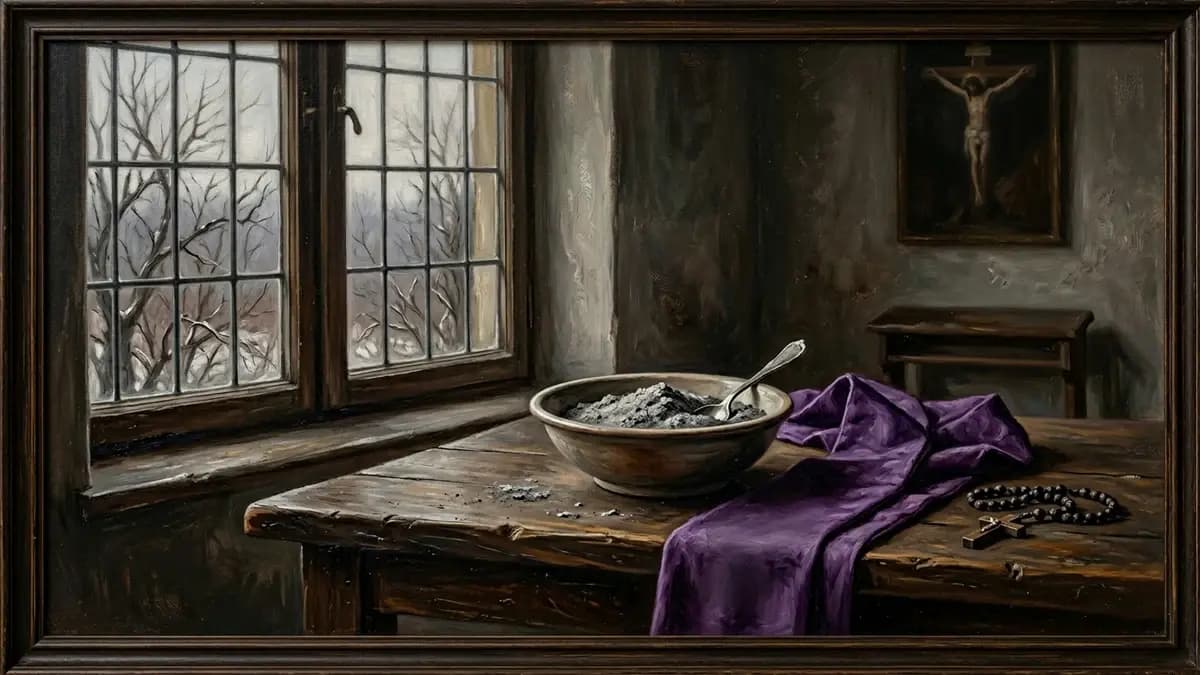
Lent begins with Ash Wednesday: ashes on the forehead remind us "from ashes we return" — our fleeting human condition and God's loving kindness still calls. The forty days recall Jesus' journey in the desert and the Church's preparation of catechumens. The three traditional pillars: prayer, fasting, almsgiving — all linked to the Lenten messages of the Holy Father over the years.
Fasting: Body and Soul
Church law reminds adults about fasting and abstinence from meat on prescribed days (consult your diocese and health). Fasting does not save by merit but trains freedom from greed and helps remember the hungry. Combine with reducing screen time, confession, and giving.

Laetare and Holy Week
Laetare Sunday (mid-Lent) may use rose color — joy because Easter is coming. The end of Lent is Holy Week: not a "break" from penance but deepening into the mystery of salvation from Palm Sunday to Easter.
Lent with Children and Inquirers
Children learn Lent through giving (almsgiving box), reducing games, or going on retreat with parents — no long lectures needed. Those preparing for baptism often live Lent with the community: this is an opportunity to sync rhythms with the Church before full initiation. This article does not replace catechumenal instruction; it only emphasizes that Lent is a common time for the whole Church.
When Fasting Causes Family Tension or Health Issues
Prioritize peace and wisdom: those with medical conditions are excused by law; those living with non-Catholics can choose forms of sacrifice that avoid misunderstanding (helping with housework instead of arguing over menus). The goal is conversion of love, not winning arguments at the dinner table.
Fasting and Prayer: Don't Isolate
Lent is stronger when connected to the parish: communal retreats, Stations of the Cross, community penance. At home, one can use Lenten booklets published by the diocese — coordinate with the pastor rather than making one's own "holier" schedule and burning out. The grace of Lent comes from communion, not just individual will.
“Repent and believe in the Gospel.”
— Mk 1:15 (Lenten reference)