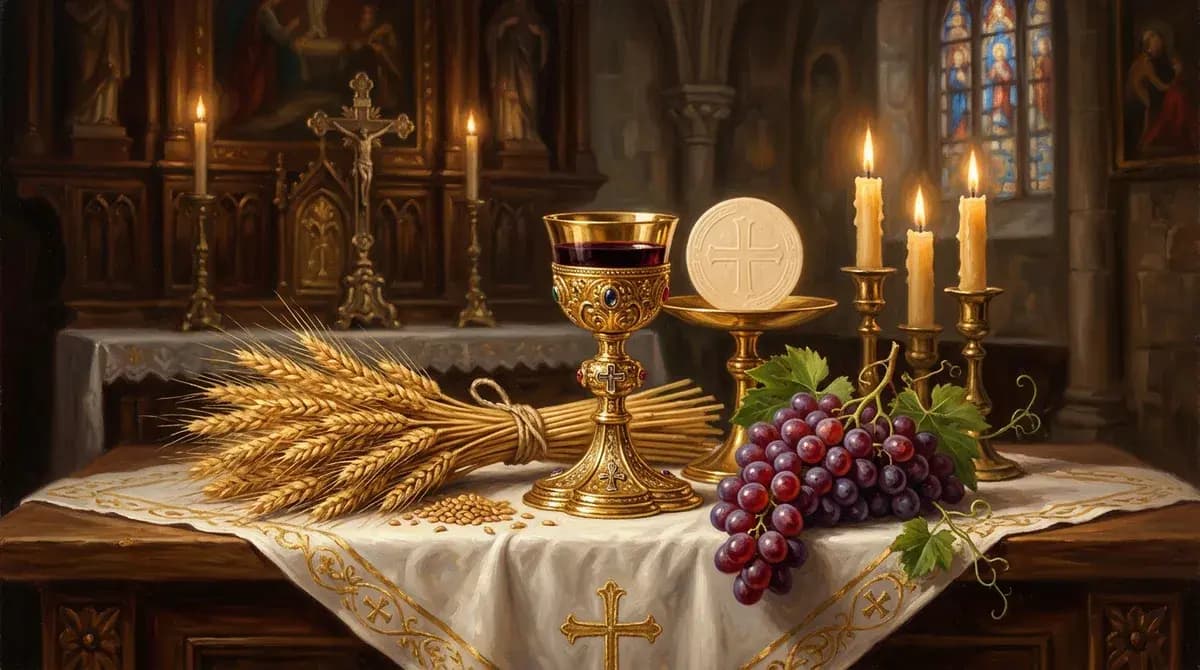
In Catholic life, the Mass and the Sacrament of the Eucharist are the “source and summit” of the entire Christian life. The Church teaches that in the Sacrament, the bread and wine after the words of consecration truly become the Body and Blood of Christ—a real presence to nourish communion. This article merely summarizes the doctrine; it does not quote the full narrative of the Last Supper.
This is the doctrine expressed in The Catechism of the Catholic Church Part Two and reinforced by councils. Readers should consult the official text on the Vatican website and the teaching of the local bishop for a full understanding of worship and communion.

The Gospel according to Luke and the letter to the Corinthians record the Lord at the Last Supper, breaking the bread, giving the cup, and the command “do this in remembrance” of Him—together with the words linking to the covenant in blood (Luke 22; 1 Corinthians 11). Please read the full narratives in an approved Bible translation.
Consult the original text
Open Luke 22:14–20 and 1 Corinthians 11:23–29; we do not include long verbatim quotes to avoid duplication and respect translation copyrights.
Worship
The Eucharist calls for an attitude of adoration: recognizing Christ present and living humbly, in communion with the suffering and glorious Church throughout the world.
“Source and Summit” in liturgical doctrine
The liturgical constitution Sacrosanctum Concilium and the Catechism of the Catholic Church (the sections on the Mass and the Eucharist, typically §1323–1327 and related chapters) call the Eucharist the “source and summit” of the entire Christian life and of the Church's mission. The Mass makes present the one sacrifice of the Cross under the signs of bread and wine; remembrance (anamnesis) in Catholic doctrine does not mean “merely recalling past events” but the saving sacrifice made present by the Lord's command. Luke 22:19–20 and 1 Corinthians 11:23–26 must therefore be understood together with the definitions of the Council of Trent and the interpretation in the CCC concerning the real presence of Christ — the bread and wine after consecration are no longer ordinary bread and wine in a theological sense. This is directly connected to charity and the responsibility of worthy communion, as canon law and episcopal teaching often remind us.