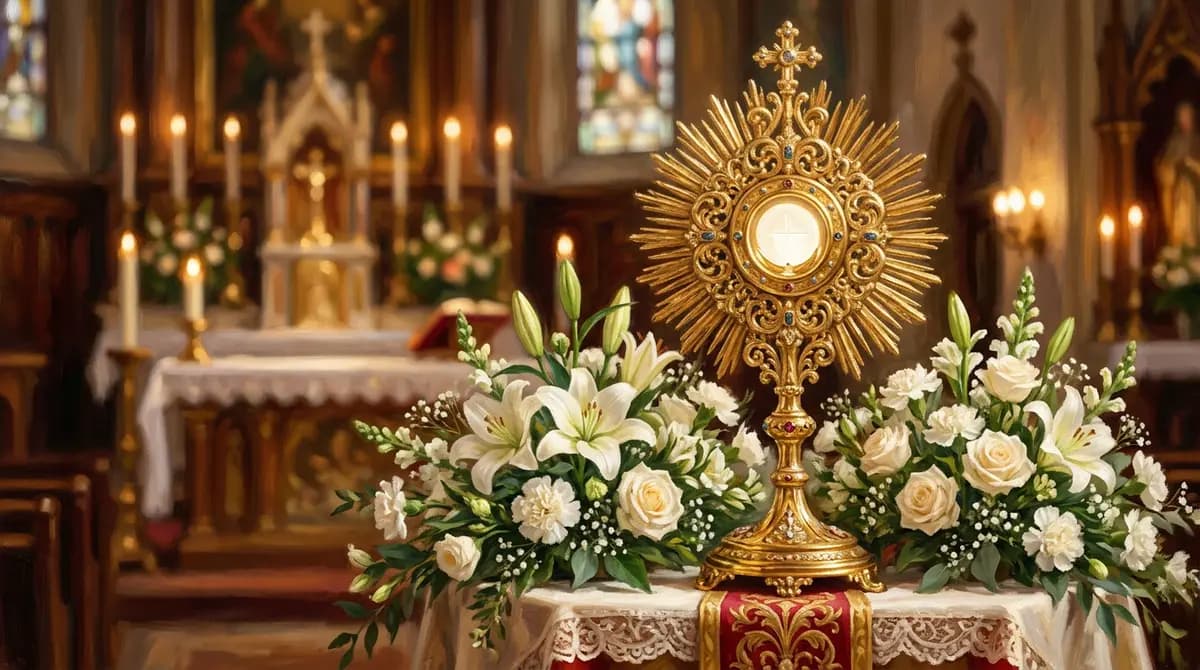
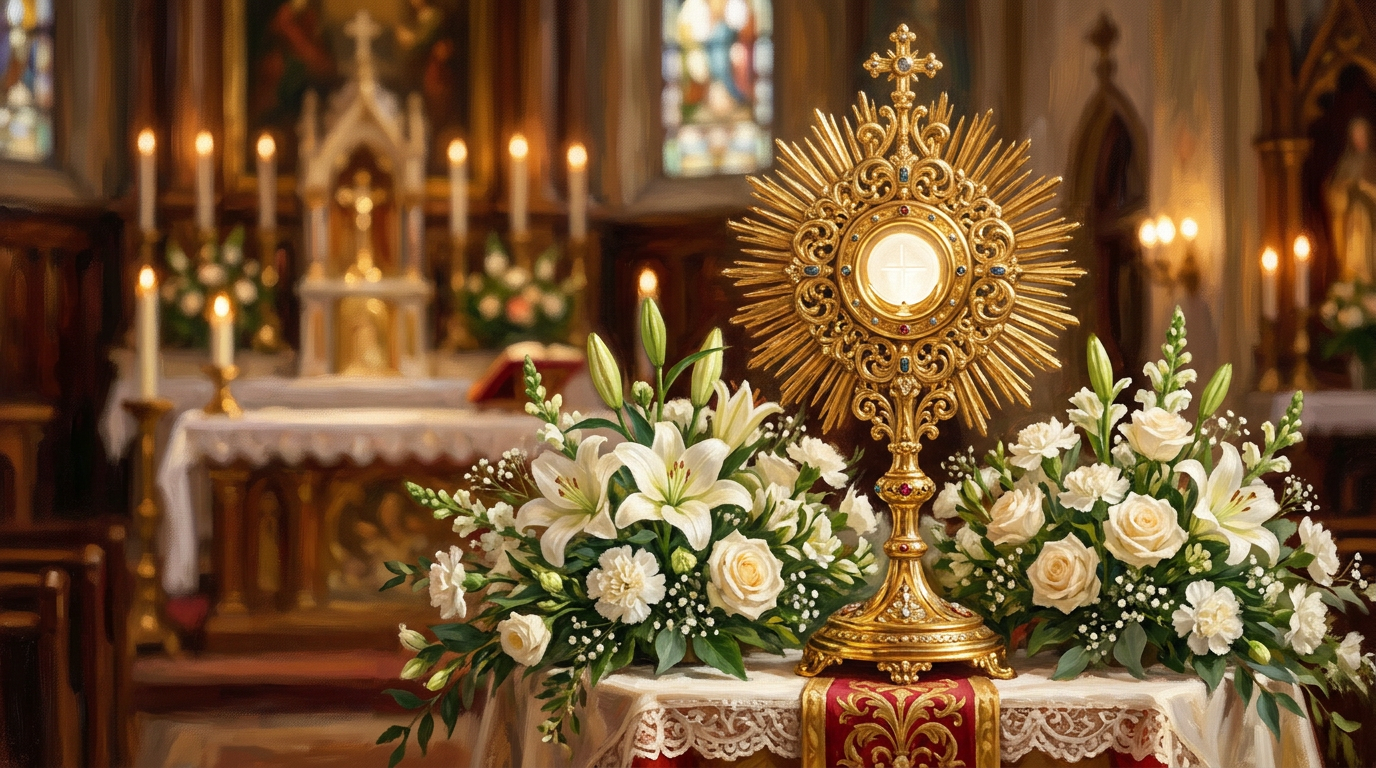
The Solemnity of the Most Holy Eucharist (according to the common calendar, the Sunday after the Solemnity of the Epiphany in many places, or on a specific day depending on local rules) places the Sacrament of the Altar at the center of the Church's attention. It is not a “secondary feast” far from everyday life: it is an occasion for public thanksgiving because God remains with His people under the form of bread and wine. The liturgy reminds us that eucharistia is the heart of Christian life — from Sunday Mass to Eucharistic adoration, from receiving Communion to communion with the poor.
Origin and customs of the procession
The tradition of outdoor processions expresses public faith: Christ walks through the city, not enclosed within private walls. In Vietnam and many dioceses, the community sings hymns, scatters flowers, and invites passersby to witness — always in order and respect for local laws. If an outdoor procession is not possible, the parish still celebrates solemnly inside the church.
Connection with the liturgical seasons
After the Easter season, the Church continues to contemplate the mystery of the Ascension and the Holy Spirit; the Feast of the Eucharist “seals” faith: the Lord does not abandon His people. Preparation through weekly Mass, prayers of praise, or an hour of silence before the tabernacle — helps the solemnity to be not merely external but a transformation of heart.
Life after the feast
Saint Paul reminds us of one bread, one body (1 Cor 10:17). Communion calls for concrete charity: visiting the sick, giving away clothes, forgiving within the family. If someone is not yet fully in communion, this is an opportunity to learn about the faith with a priest rather than arguing online.
Children and newcomers to the faith
Children learn the feast through their parents' attitude when receiving Communion, through songs, and through reverent silence. Those preparing to join see that the Church is not ashamed of the centrality of the Eucharist — a difference from many secular notions of religious “privacy.”
Urban and remote parishes
In cities, many communities walk together in a single procession or hour of silence before the Eucharist — showing the unity of the Church beyond administrative boundaries. In remote areas, if there are few people or difficult roads, the parish still celebrates solemnly in the chapel, praying for the whole diocese, because the joy of the Sacrament is not measured by the scale of external forms but by the depth of faith and communion.