Many newcomers to the Bible think it is a single book written by one author. In fact, the Bible is a collection of dozens of books—poetry, history, law, prophecy, Gospels, letters—formed over many centuries. The question 'who wrote?' must therefore be split into two levels: human authors (language, culture, context) and the divine author whom the Church calls the Holy Spirit guiding so that the Word of God is truly the Word of God for today (Dei Verbum).
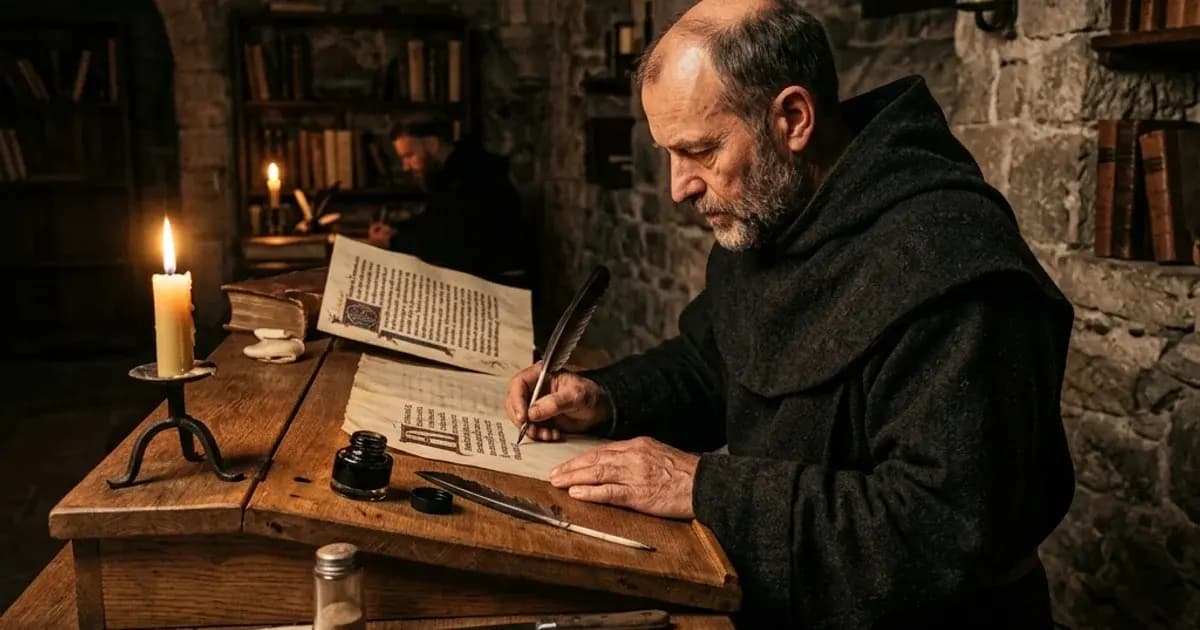
Human Authors: Many People, Many Contexts
Moses is traditionally associated with the first five books; the Psalms bear the name of King David or the priests; the prophetic books record the words of Isaiah, Jeremiah, etc.; the Gospels are linked to Matthew, Mark, Luke, John; the apostolic letters bear the names of Paul, Peter, James… Modern scholars also discuss secondary authors, editors, and oral tradition before writing was fixed—this does not diminish the value of divine revelation but helps us read according to the correct genre and context.

Why Does the Church Say the Holy Spirit is the "Author"?
Catholic faith affirms that God is the ultimate author of the Bible: through human beings and their cultures, God wanted to give us what is necessary for salvation. Therefore we read it both as a historical text (asking: what did the human author intend to say to his contemporary readers?) and as the living Word (asking: what does the Lord want to say to the Church today in communion with tradition?). The two questions do not exclude each other.
For every Scripture is authored by God, therefore all words of the Bible are inspired by God and are valuable for teaching, reproof, correction, and training in righteousness.
— 2 Timothy 3:16 (reference — translations may differ)Canon: Why These Particular Books?
The question 'who chose which books to include in the Bible?' does not have an answer like an overnight meeting with minutes. Over many centuries, the Church in communion recognized—under the guidance of the Holy Spirit—the books that were read, preached, and considered revelation for the life of faith. The Catholic canon (including the Old Testament books inherited by the Church of Jesus and the entire New Testament) is a result of community recognition, not personal preference. When reading at home, one should maintain communion with the canon taught by the parish: avoid adding strange books or omitting books that the Church still proclaims in the Liturgy—this is also a way to respect the meaning of 'Sacred Scripture of the Church'.
Inspiration and the Reader's Responsibility
Inspiration guarantees that the Bible is truthful in the sense that God wants to give for salvation, not turning every verse into 'absolute self-interpretation' without study or the shepherd. The Holy Spirit works in the Word and in the Church; therefore the faithful should read slowly, consult commentaries, ask the pastor, and compare with Sunday readings. This attitude avoids two extremes: individualism (just me and the book, without teaching) and indifference (considering the Bible as ancient stories with no relevance to life).
In Summary
- The Bible has many human authors and many genres.
- The Church acknowledges the truth of Sacred Scripture in giving us the truth necessary for salvation.
- Reading combining historical context and the faith of the Church avoids misunderstanding.