The Book of Esther tells the story of the deliverance of the Jewish people from genocide in the Persian Empire. Wikipedia — Esther summarizes the plot, the Greek Additions (supplementary passages), and historical debates; Britannica — Esther outlines the character and the feast of Purim; Jewish Virtual Library — Esther places it within Purim and Midrash. An important scholarly point: the Hebrew text does not directly mention the name of God — both Britannica and Wikipedia note this; the Additions add more explicit prayers. Key passages: Bible Gateway — Esther 4 (Mordecai and Esther), Esther 7–8.

Plot and Meaning
Esther, a Jew, becomes queen; Haman plots to destroy the people; she risks entering the king's presence; she saves her people. Theology: hidden providence (God is not named in Hebrew) is noted by many commentators as a deliberate literary device. Wikipedia's entry on Additions to Esther explains the longer version found in some Christian canons.
Who knows? Perhaps you have come to royal dignity for just such a time as this.
— Esther 4:14b (paraphrased, reference)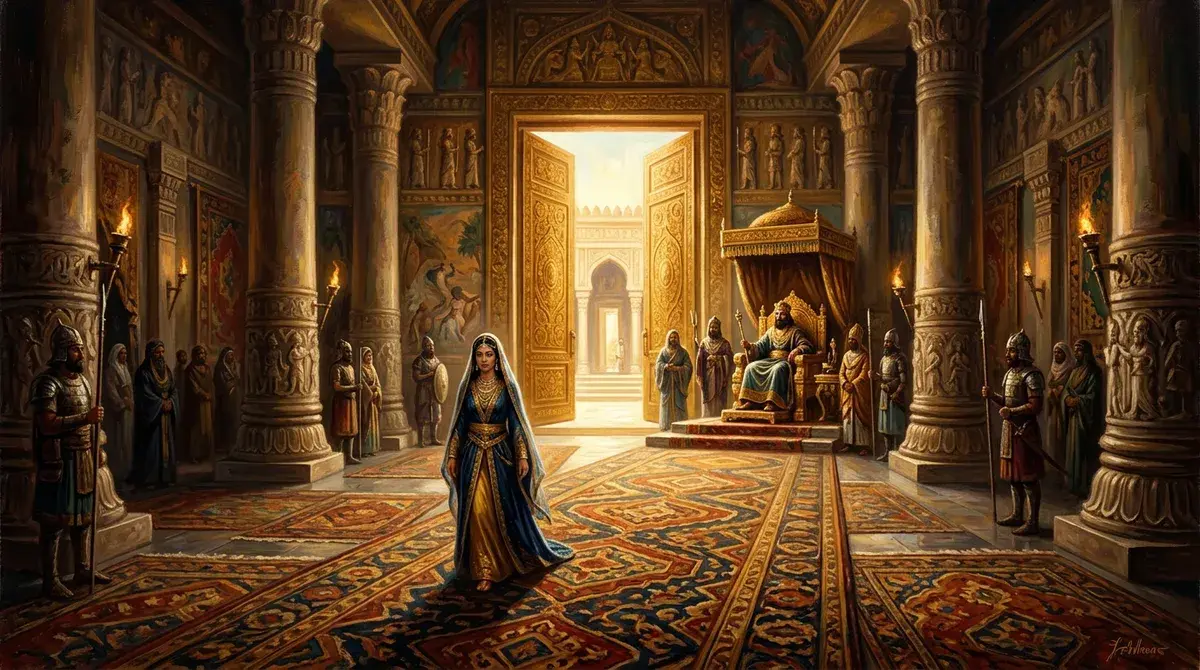
Source Analysis
Britannica is concise for general readers; Wikipedia details canon and Septuagint; JVL focuses on Purim. Exercise: read Esther 4, then write two sentences: (1) Mordecai's point, (2) Esther's point — avoid merely summarizing the encyclopedia entries.
Reading Esther in Catholic Faith Today
The book emphasizes courage, women's wisdom, and community responsibility in the face of genocidal plots — themes still urgent. Christians do not read it as a complete historical record of ancient Persia but as a testimony to providence and to the voice of the weak crying out for help. When comparing Wikipedia with Scripture, remember: encyclopedias answer "what happened according to sources," whereas the Bible invites us to stand on the side of justice in prayer and action.
Reading Plan
Esther 2–5; 7–9; read the Esther entry on Britannica; (optional) compare the Additions on Bible Gateway if your translation includes them.
Summary
- Esther: political courage and deliverance of her people.
- The Hebrew text does not name God — a debated literary device.
- The Greek Additions add prayers — different from the shorter version.
- Wikipedia: canon; Britannica: summary; JVL: Purim.